Ranikot Fort Sindh: Hiking the Great Wall Gates Loop
November 08, 2025
Standing at the base of Ranikot Fort, you might do a double-take. The massive stone walls snake across the barren hills of Sindh's Kirthar range, stretching 32 kilometers in total length. This makes ranikot fort sindh the world's largest fort by perimeter—earning it the nickname "Great Wall of Sindh". Yet somehow, this architectural marvel remains one of Pakistan's least-visited wonders.
The fort's mystery runs as deep as its history. Its origins remain debated among historians, with evidence suggesting multiple construction phases spanning different historical periods. Theories range from Arab conquerors to Persian emperors, with construction dates varying by centuries depending on which historian you ask. What's certain is this: hiking the ranikot gate hike loop offers an adventure combining history, nature, and the thrill of exploring a place that feels forgotten by time.
The gates—Sann Gate, Amri Gate, Shah-Pere Gate, and Mohan Gate—punctuate the fort's perimeter like checkpoints on an epic historical fortification loop. Walking between them means traversing rocky terrain, climbing crumbling staircases, and imagining the thousands of soldiers who once patrolled these ramparts.
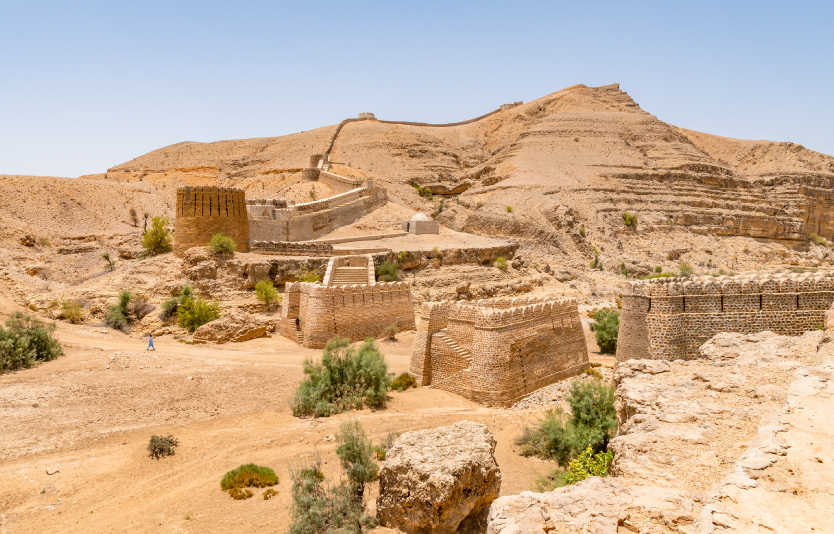
Jamshoro Rani Kot Fort Great Wall of Sindh
Getting to Ranikot Fort: Access and Planning
Ranikot Fort sits approximately 90 kilometers north of Hyderabad and 30 kilometers from the town of Sann. The journey itself becomes part of the adventure, taking you through rural Sindh's landscape of date palm groves and scattered villages.
Transportation Options:
- Private car from Karachi: 3-4 hours (270 kilometers)
- Private car from Hyderabad: 1.5-2 hours (90 kilometers)
- Hired vehicle from Sann: PKR 3,000-5,000 for full day
- Tour operators: PKR 8,000-15,000 per person (group rates)
Public transport doesn't reach the fort directly. The most practical approach involves driving to Sann town, then hiring a local vehicle for the final stretch. The road quality varies—paved highways give way to rough tracks as you approach the fort.
Most visitors arrive early morning to avoid the intense Sindh heat. The fort has no shade, and summer temperatures regularly exceed 40°C. Winter (November-February) offers the most comfortable hiking conditions with temperatures ranging 15-25°C.
Essential Planning Tips:
- Bring your own food and water (no facilities at fort)
- Fuel up in Sann or Hyderabad (no petrol stations nearby)
- Download offline maps (mobile signals unreliable)
- Inform someone of your plans (remote location, few visitors)
- Start by 8:00 AM to complete loop before midday heat
Understanding the Great Wall of Sindh Architecture
The great wall of sindh stretches across hills and valleys in a configuration that still puzzles archaeologists. Unlike defensive walls that protect cities, Ranikot seems to defend... nothing. The fort encloses approximately 32 square kilometers of mostly empty land with no significant structures inside except a few smaller forts.
Main Features:
- Total wall length: 32 kilometers (some sources say 26-28 kilometers)
- Wall height: 6-9 meters on average
- Wall thickness: 5-6 meters at base
- Material: Dressed stone blocks and mud mortar
- Age: Estimates range from 1st century to 17th century
The walls follow natural topography rather than geometric patterns. They climb steep hillsides, dip into valleys, and create dramatic silhouettes against the sky. Walking sections of the wall feels like traversing a stone serpent frozen mid-movement across the landscape.
Inside the main fortification sit two smaller forts: Miri and Shergarh. These provided residential and administrative spaces, though little remains beyond foundations and partial walls. The contrast between the well-preserved outer walls and the crumbling interior structures deepens Ranikot's mystery.
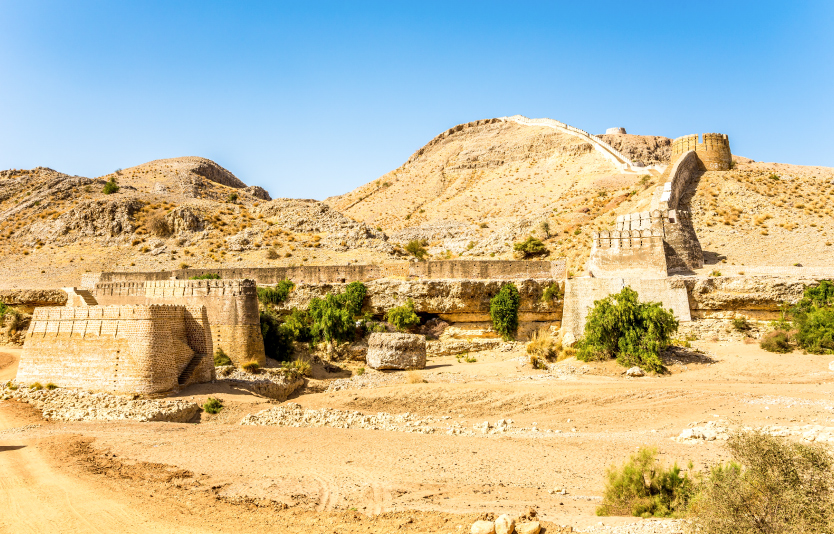
View at the Ranikot fort also known as the Great Wall of Sindh
The Complete Ranikot Gate Hike Loop
While the fort’s walls link several major gates, there is no officially established or fully walkable loop connecting all of them. Most visitors explore individual sections rather than attempting a full circuit. Few visitors attempt the complete loop due to length and difficulty. Most choose to visit 2-3 gates and hike connecting wall sections.
Complete Loop Details:
- Total distance: Approximately 32 kilometers
- Hiking time: 10-14 hours (extremely challenging)
- Elevation gain: 500+ meters cumulative
- Difficulty: Very strenuous
- Recommended: Multi-day with camping (not officially supported)
Partial Loop Recommendations:
Most travelers select shorter sections offering the best sindh heritage travel experience without exhaustion.
Sann Gate to Mohan Gate Section (Recommended)
- Distance: 6-8 kilometers
- Duration: 3-4 hours
- Difficulty: Moderate
- Highlights: Best-preserved walls, panoramic views, accessible terrain
This section provides the quintessential ranikot fort sindh experience. The path follows clear trails along the wall's top in many places, offering commanding views of the Kirthar range. Mohan Gate sits dramatically perched on a hillside, its three-story structure still partially intact.
Amri Gate to Shah-Pere Gate Section
- Distance: 4-6 kilometers
- Duration: 2-3 hours
- Difficulty: Moderate to challenging
- Highlights: Rocky terrain, photography opportunities, isolation
This less-traveled section attracts photographers. The walls weave through more dramatic topography, creating stunning compositions. Expect rougher trails and more scrambling over rocks.
Sann Gate Base Exploration
- Distance: 1-2 kilometers
- Duration: 1 hour
- Difficulty: Easy
- Highlights: Main entrance, best infrastructure, cultural significance
Sann Gate serves as the primary entrance and most visited section. Even short on time, visitors should explore this area. The gate's architecture shows Persian influences with its arched entrance and flanking bastions. Nearby sits a small mosque and the remains of barracks.
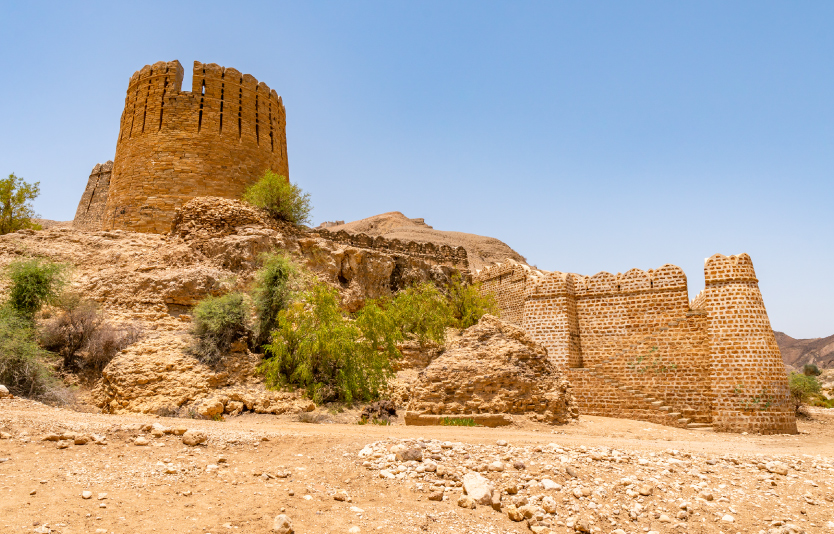
Jamshoro Rani Kot Fort Great Wall of Sindh Picturesque Breathtaking Panoramic
What to Expect During Your Hike
The ranikot gate hike challenges even experienced trekkers. The combination of distance, heat, and terrain requires preparation and realistic expectations.
Trail Conditions:
- Mostly unmarked paths (follow wall visibility)
- Rocky, uneven surfaces throughout
- Loose stones on steep sections
- Some wall-top walking possible (use extreme caution)
- No maintained trails or signage
Physical Requirements:
- Good cardiovascular fitness
- Strong ankles (uneven terrain constant)
- Comfortable with heights (some exposed sections)
- Heat tolerance (or winter scheduling)
- Self-sufficiency (no rescue services readily available)
The isolation adds both appeal and risk. You might not see another person for hours. This solitude creates powerful connection with the landscape but means any injury or problem becomes serious quickly.
Historical Context: Sindh Heritage Travel Insights
Understanding Ranikot's history enhances the hiking experience, even if that history remains debated.
Popular Theories:
- Arab origin: Built after the 8th-century conquest of Sindh
- Persian construction: Created by Persian rulers controlling the region
- Scythian era: Some scholars date sections to pre-Islamic periods
- Talpur dynasty: 19th-century rulers possibly restored or expanded existing structures
Archaeological evidence supports multiple construction phases. Different wall sections show varying building techniques, suggesting the fort evolved over centuries rather than arising from single-period construction.
The fort's name "Ranikot" translates roughly to "Queen's Fort," though no reliable historical record explains why. Local legends fill the gaps, with stories of queens, treasures, and supernatural protectors varying from village to village.
During British colonial rule, military surveys documented Ranikot but showed little interest in its preservation. The remoteness that once provided defense now protects against development, leaving the fort remarkably unchanged for decades.
Practical Hiking Essentials
Success at ranikot fort sindh depends heavily on preparation. The remote location means forgetting something can derail your trip.
Must-Bring Items:
- Water: 3-4 liters per person minimum (no water sources)
- Sun protection: Hat, sunglasses, SPF 50+ sunscreen
- Sturdy boots: Ankle support essential for rocky terrain
- First aid kit: Include blister treatment and pain relievers
- Snacks/meals: High-energy food, no purchase options available
- Phone/camera: Charged, with offline maps downloaded
- Cash: PKR 2,000-3,000 for local guides or vehicle issues
- Layers: Morning cool vs. midday heat temperature swings
Optional but Recommended:
- Hiking poles for stability on descents
- Binoculars for wildlife and distant fort sections
- Portable phone charger
- Small backpack (hands-free hiking safer)
- Whistle for emergency signaling
Wildlife and Natural Environment
The area around the great wall of sindh hosts surprising biodiversity. The Kirthar National Park borders the fort, creating habitat for wildlife rarely seen in developed areas.
Possible Wildlife Sightings:
- Urial (wild sheep) in distant hillsides
- Various raptor species circling above
- Monitor lizards sunning on rocks
- Jackals (usually heard rather than seen)
- Numerous bird species including partridges
Snakes inhabit the area, including potentially dangerous species. Watch where you place hands and feet when climbing rocks. Most snakes avoid humans, but caution prevents problems.
The vegetation remains sparse—thorny bushes, desert grasses, and scattered drought-resistant plants. Spring (March-April) brings brief green periods and occasional wildflowers, transforming the usually brown landscape.
Photography Tips for the Fort
The unique architecture and dramatic setting make ranikot fort sindh a photographer's dream destination.
Best Photography Spots:
- Mohan Gate exterior: Sunset light creates golden walls
- Wall sections on ridgelines: Silhouettes against sky
- Interior bastions: Architectural detail shots
- Panoramic views from high points: Wide-angle landscapes
Timing Considerations:
- Golden hour (just after sunrise): Cool temperatures, soft light
- Late afternoon (before sunset): Dramatic shadows, warm tones
- Avoid midday: Harsh light flattens features, extreme heat
Drone photography could capture stunning aerial perspectives of the wall's serpentine path. However, verify current regulations—restricted areas sometimes include historical sites.
Local Communities and Cultural Respect
The villages near Ranikot follow traditional Sindhi culture. Respectful interaction ensures welcome for future visitors.
Cultural Guidelines:
- Dress modestly: Long pants, covered shoulders for everyone
- Women: Consider headscarf, especially when meeting locals
- Ask permission: Always before photographing people
- Greet respectfully: "Assalam-o-Alaikum" appreciated
- Decline offers politely: If uncomfortable accepting hospitality
Local guides can be hired in Sann town (PKR 1,500-2,500 for full day). They provide historical context, navigation help, and cultural interpretation. Their knowledge enriches the experience significantly.
Frequently Asked Questions
Is it safe to visit Ranikot Fort as a tourist?
Yes, Ranikot Fort is generally safe in terms of security, but its remoteness and harsh environment pose significant logistical and physical risks. The area sees few security issues, and locals welcome visitors. However, the remoteness creates different risks—medical emergencies, vehicle breakdowns, or getting lost pose bigger concerns than crime. Travel with reliable transportation, inform others of your plans, and bring emergency supplies. Women travelers should consider joining groups or hiring reputable guides. The bigger safety challenges involve physical hiking risks like dehydration, falls, or heat exhaustion rather than security threats.
How much time should I allocate for visiting Ranikot Fort?
For a meaningful visit to the historical fortification loop, plan a full day from your base city. If staying in Karachi, leave by 6:00 AM to arrive by 9:00-10:00 AM, explore 4-6 hours, and return by evening. From Hyderabad, you can start later but should still dedicate 6-8 hours total. Serious hikers attempting longer wall sections might consider two days with camping, though no official facilities exist. At minimum, spend 3-4 hours exploring Sann Gate and one connecting wall section to appreciate the fort's scale properly.
Are there any entrance fees or permits required?
Currently, ranikot fort sindh charges no entrance fee and requires no special permits for Pakistani nationals. Foreign visitors should carry passport copies and may occasionally encounter security checkpoints asking about travel purposes. The Sindh Archaeology Department technically manages the site, but minimal infrastructure exists. Some local community members may request small donations (PKR 200-500) for "maintenance," which often helps support informal caretakers. Hiring guides from Sann town is voluntary but recommended, with costs separate from any site fees.
Discover Ranikot Fort with Streamlined Travel Planning
The ranikot fort sindh offers an adventure unlike any other in Pakistan. Walking the great wall of sindh means stepping into mystery—following walls that stretch endlessly across barren hills, climbing gates that once controlled access to... what exactly? The mystery endures, but the experience rewards every visitor willing to make the journey.
This historical fortification loop combines physical challenge with historical fascination. Whether you complete the full circuit or explore just one gate section, the fort's scale and isolation create lasting impressions. Few places offer such dramatic architecture in such pristine, undeveloped settings.
Before embarking on your sindh heritage travel adventure, ensure your documentation stays sorted. GVC simplifies Pakistan visa applications for international travelers, managing your Pakistan travel authorization efficiently. You can easily monitor your application progress throughout the process, focusing on preparing for the ranikot gate hike rather than paperwork concerns.
The walls of Ranikot have stood for centuries, waiting for curious travelers to explore their mystery. They'll stand for centuries more, but your opportunity to experience this incredible site starts with planning today. Review available visa services and pricing and begin preparing for an adventure that connects you with one of Pakistan's most enigmatic historical treasures. The Great Wall of Sindh awaits—and its secrets reveal themselves only to those who make the journey.
Related Articles:
- Thatta And Makli Necropolis: UNESCO Tomb Art And Craft Villages
- Hidden Treasures Of Balochistan Pakistan
- Exploring Punjab Pakistan Destinations: Ultimate Travel Guide
- Peshawar Old City Heritage Walk: Qissa Khwani Bazaar And Sethi House
- Backpackers Guide To Lahore: Exploring Pakistan’s Cultural Capital
- Top 7 Tourist Attractions In Pakistan For Adventure Seekers
- Pakistan Travel Safety: What You Need To Know Before Visiting
Tags