Peshawari Chappal Makers: Leather Sourcing and Fit Guide
October 09, 2025
The rhythmic hammering echoes through Peshawar's old bazaars as master craftsmen shape leather into Pakistan's most iconic traditional footwear. The Peshawari chappal represents more than just comfortable sandals - these handcrafted leather shoes embody centuries of Pashtun craftsmanship and practical design perfected for the region's terrain and climate. Understanding the intricate process of chappal makers, from leather sourcing to achieving the perfect fit, opens a window into one of Pakistan's most enduring artisan traditions.
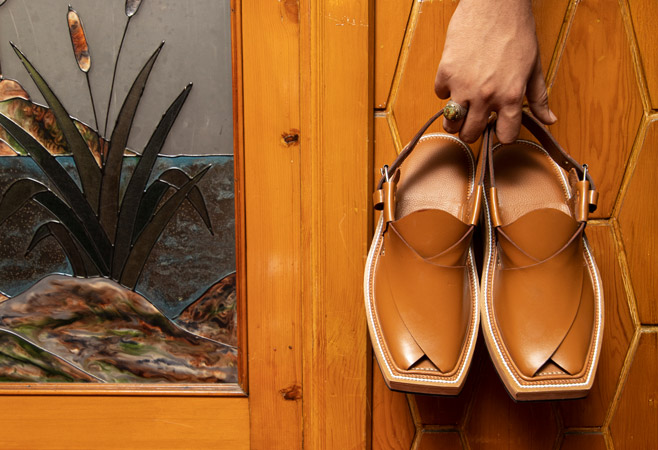
The Peshawari chappal
The Heritage of Traditional Footwear Craftsmanship
The Peshawari chappal tradition is believed to date back several centuries, though exact historical timelines are difficult to verify due to limited documentation when Afghan traders and local artisans developed a distinctive sandal design suited to the rocky terrain of the Northwest Frontier. The characteristic features - thick leather soles, minimal stitching, and open-toe design - evolved from practical necessity rather than fashion trends.
Master chappal makers pass their techniques through family generations, with sons learning beside fathers in workshops tucked into narrow bazaar lanes. Many families, especially in bazaars like Qissa Khwani, have practiced the craft for multiple generations. Traditional workshops typically produce a limited number of pairs per day depending on staff and level of handwork involved.
The traditional footwear industry supports thousands of families across Peshawar, from leather tanners to skilled cobblers. Each chappal requires 2-3 days to complete, depending on leather quality and design complexity. Premium pairs destined for export markets or wealthy customers can take up to a week.
Key characteristics of authentic Peshawari chappals:
- Thick buffalo or cow leather - Provides durability and comfort
- Minimal stitching - Reduces wear points and maintains flexibility
- Open-toe design - Allows air circulation in hot climates
- Flat sole - Distributes weight evenly for long walks
- Traditional brown finish - Natural leather color with minimal dyes
Modern variations include closed-toe designs for formal wear and embellished versions with brass studs or decorative stitching. However, purists maintain that authentic Peshawari chappals should remain simple and functional.
Understanding Leather Sourcing and Quality Standards
The foundation of quality Peshawari chappals lies in proper leather sourcing, with master chappal makers maintaining relationships with specific tanneries and leather suppliers built over decades. The best workshops source buffalo hide from animals raised in Punjab's agricultural regions, where consistent diet and climate produce superior leather quality.
Buffalo leather dominates the traditional footwear market due to its thickness, durability, and ability to soften with wear while maintaining structural integrity. Local tanneries in Peshawar's Hashtnagri area process raw hides using traditional. Some workshops prefer vegetable-tanned hides, which take significantly longer to process than chrome-tanned leather commonly used for affordable chappals.
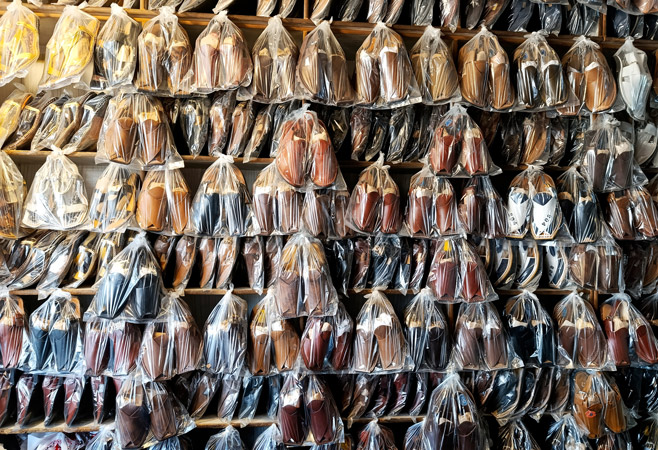
Traditional leather sandals, known as Peshawari Chappal
Leather quality grades used by chappal makers:
- Grade A - Premium buffalo hide with minimal scratches (1,200-1,800 PKR per square foot)
- Grade B - Good quality cow leather with minor blemishes (800-1,200 PKR per square foot)
- Grade C - Standard leather for budget chappals (400-800 PKR per square foot)
- Export Quality - Specially treated leather for international markets (2,000-3,000 PKR per square foot)
Note: High-quality buffalo leather generally ranges between 300–600 PKR per square foot depending on tannery and finish
Experienced buyers test leather quality by flexing samples to check for cracks, examining grain patterns for consistency, and smelling for proper tanning completion. Poor quality leather develops cracks within weeks, while premium hides improve with age and develop rich patina over months of wear.
The leather sourcing process involves master craftsmen visiting tanneries weekly to hand-select hides meeting their standards. Haji Abdul Rahman, a renowned chappal maker, explains that he can identify leather quality by touch alone, feeling for proper thickness and moisture content that indicates complete tanning.
Finding Authentic Chappal Makers in Peshawar
Peshawar's traditional footwear industry centers in specific bazaar areas where generations of families have maintained workshops. The main concentration exists in Qissa Khwani Bazaar (Storytellers' Market), Chowk Yadgar, and Sarafa Bazaar, where narrow lanes house dozens of small workshops alongside larger retail establishments.
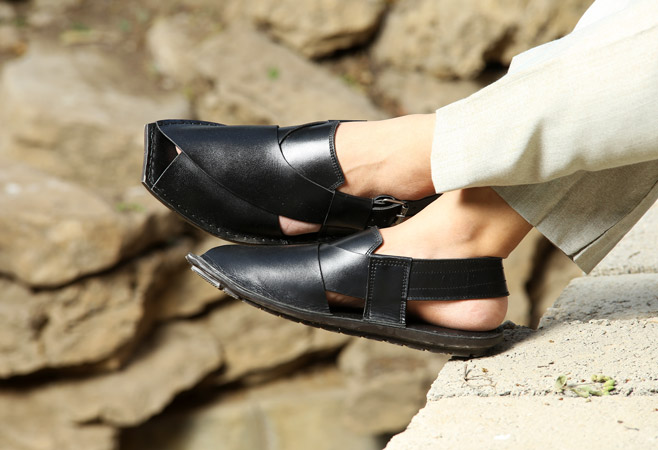
Afghani style peshawari sandal
Mohammad Anwar & Sons in Qissa Khwani Bazaar represents one of Peshawar's most respected chappal makers, operating since 1952. Their three-generation family business maintains traditional methods while offering modern customer service including size consultations and custom fittings. Prices range from 1,500-4,500 PKR depending on leather quality and design complexity.
Renowned chappal makers worth visiting:
- Ustad Leather Works - Specializes in export-quality traditional designs
- Frontier Footwear - Combines traditional methods with modern retail presentation
- Khan Chappal House - Family workshop known for custom sizing and fit
- Traditional Crafts Center - Government-supported workshop with apprenticeship programs
- Peshawar Leather Collective - Cooperative representing multiple small makers
Authentic workshops welcome visitors to observe the crafting process, though peak production hours (10 AM - 2 PM) may limit interaction time. Some shopkeepers in tourist-facing areas speak basic English, though most craftsmen primarily speak Pashto or Urdu. Avoid pushy salesmen in tourist areas who sell machine-made imitations at inflated prices.
Mastering the Perfect Fit Guide
Achieving proper fit with Peshawari chappals requires understanding their unique sizing system and break-in characteristics. Traditional footwear differs significantly from Western shoe fitting, as the leather gradually molds to individual foot shapes over 2-3 weeks of regular wear.
Master chappal makers use foot measurements rather than standardized size charts, taking length, width, and arch height into account. The traditional measuring process involves standing on paper while the craftsman traces foot outline and marks pressure points. This custom approach ensures proper fit that improves with wear.
Essential fitting considerations:
Measurement | Traditional Method | Modern Equivalent | Fit Notes |
Length | Heel to longest toe | Add 0.5-1 cm for comfort | Allow toe movement space |
Width | Across ball of foot | Consider leather stretch | Snug initially, expands with wear |
Arch height | Foot impression depth | Custom arch support | Critical for long-term comfort |
Proper fitting process steps:
- Stand naturally while craftsman traces both feet
- Identify pressure points and calluses indicating foot characteristics
- Discuss intended use (daily wear, formal occasions, walking distances)
- Select appropriate leather thickness and sole design
- Schedule fitting appointment after initial construction
New Peshawari chappals should feel snug but not tight, with leather gradually conforming to foot shape. Quality leather becomes more comfortable with each wearing, developing personalized contours that make the chappals uniquely yours. Poor fitting results in blisters, pressure sores, or premature leather cracking.
Price Ranges and Quality Indicators
Peshawari chappal pricing varies dramatically based on leather quality, craftsmanship level, and workshop reputation. Understanding price ranges helps identify fair deals while avoiding overpriced tourist-targeted products or suspiciously cheap imitations.
Budget range (800-1,500 PKR) covers basic chappals using Grade C leather with machine stitching. These serve casual wear needs but lack durability for daily use. Many workshops produce this category for local market demand and price-conscious customers.
Mid-range options (1,500-3,500 PKR) represent the sweet spot for quality traditional footwear using Grade B leather with hand-stitching details. This category includes most authentic Peshawari chappals sold to serious buyers seeking genuine craftsmanship at reasonable prices.
Premium category (3,500-8,000 PKR) features Grade A buffalo leather, master craftsman construction, and custom fitting services. These chappals improve significantly with age and can last 5-10 years with proper care.
Export quality (8,000-15,000 PKR) represents the pinnacle of chappal making, using specially treated leather and techniques refined for international markets. Many overseas Pakistani communities specifically request this quality level.
Quality indicators to examine:
- Leather flexibility without cracking when bent
- Consistent stitching with strong thread throughout
- Smooth interior finish without rough edges
- Even sole thickness and proper heel support
- Natural leather smell without chemical odors
Bargaining is expected in traditional workshops, with final prices typically 20-30% below initial quotes. However, attempting to negotiate below fair value insults skilled craftsmen and may result in reduced quality or service.
Care and Maintenance for Longevity
Proper care extends Peshawari chappal lifespan significantly while maintaining their comfort and appearance. Traditional footwear requires different maintenance approaches compared to modern shoes, focusing on leather conditioning and gradual break-in procedures.
Daily care routine:
- Allow 24-hour drying between wears to prevent moisture damage
- Remove dirt with soft brush or damp cloth
- Apply leather conditioner monthly for flexibility
- Store in cool, dry location away from direct sunlight
- Rotate between multiple pairs for extended wear
Quality buffalo leather improves with age when properly maintained, developing rich patina and increased flexibility. Many chappal owners report their shoes becoming most comfortable after 6-12 months of regular wear.
Seasonal maintenance includes:
- Deep conditioning before monsoon season to prevent water damage
- Professional sole repair when wear patterns develop
- Leather treatment for extended storage periods
- Re-stitching loose areas before problems worsen
How long do authentic Peshawari chappals typically last with regular wear?
Quality Peshawari chappals using Grade A buffalo leather last 3-7 years with daily wear, depending on usage patterns and maintenance. Premium export-quality chappals can serve 8-12 years when properly cared for, with many owners reporting decades of use from exceptional pieces.
What's the difference between tourist market chappals and authentic workshop products?
Authentic workshop chappals use genuine buffalo or cow leather with hand-stitching, while tourist market versions often feature synthetic materials or poor-quality leather with machine construction. Authentic pieces cost 1,500-4,500 PKR from established workshops, while tourist versions sell for 500-1,200 PKR with inferior durability.
Can chappal makers accommodate unusual foot sizes or medical requirements?
Experienced chappal makers routinely accommodate custom sizing, foot deformities, and medical requirements through their traditional measuring and construction methods. Master craftsmen can create orthopedic-friendly designs, extra-wide fittings, or specialized arch support based on individual foot characteristics and health needs.
Peshawari chappal craftsmanship represents one of Pakistan's most enduring artisan traditions, where skilled makers transform raw buffalo leather into comfortable, durable traditional footwear through techniques passed down over centuries. Understanding the leather sourcing process, finding authentic workshops, and achieving proper fit ensures visitors acquire genuine chappals that improve with age while supporting traditional craftsmen who maintain this cultural heritage. These iconic sandals offer more than footwear - they provide a tangible connection to Pashtun culture and practical design perfected for the region's demanding terrain.
Discovering Pakistan's traditional crafts like authentic Peshawari chappals requires proper travel planning and documentation support. GVC provides comprehensive visa services for cultural tourists and craft enthusiasts exploring Pakistan's artisan communities and traditional markets. Their expert guidance ensures smooth travel experiences while visiting workshops and bazaars throughout Peshawar and surrounding regions. For travelers planning extended craft exploration tours, comprehensive Pakistan destination information helps optimize cultural tourism itineraries. Whether you need transparent visa pricing details or want to monitor your application progress, GVC supports your journey to Pakistan's authentic cultural experiences and traditional craft centers.
Related Articles:
- Peshawar University Town Cafes And Bookshops: Student-Life Circuit
- Backpacker's Guide To Lahore: Exploring Pakistan's Cultural Capital
- Multan Sufi Trail: Shrines, Blue Pottery, And Mango Season
- Pakistan Travel Guide: Discover The Gems Of South Asia
- Discover The Wonderful Of Best Tourist Attractions Pakistan For Travelers
- Solo Female Travel Tips: A Guide For Women Exploring The World
- Trip To Pakistan: Preparing Short Tour In Pakistan For All Travelers
Tags