Ratti Gali Lake Trek: Camps, Snow Bridges, and Wildflowers
November 08, 2025
The first glimpse of Ratti Gali Lake takes your breath away—literally, since you're standing at around 3,650–3,700 meters above sea level, where the air begins to thin. This glacial lake in Azad Kashmir sits cradled between snow-capped peaks, its turquoise waters reflecting clouds that drift overhead. The ratti gali lake trek has become legendary among Pakistan's trekking routes, and for good reason: it combines accessible difficulty with extraordinary rewards.
Getting to this alpine paradise means crossing streams on snow bridges, camping beside wildflower meadows, and pushing through challenging terrain that tests even experienced hikers. But every step pays dividends. By the time you reach the lake's edge, you'll understand why trekkers return year after year, why photographers obsess over capturing its beauty, and why this lake trekking guide might just inspire your next adventure.
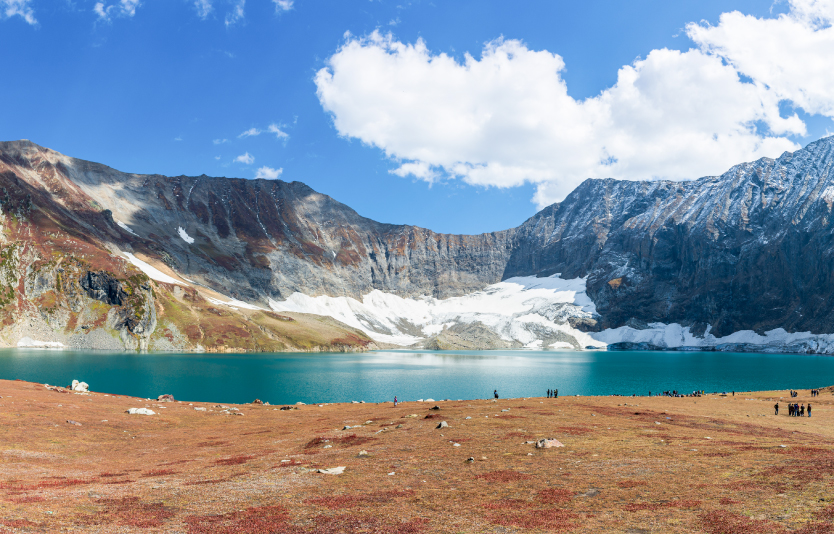
A scenic panoramic view of Ratti Gali Lake
Getting Started: Dowarian Base Camp Access
The journey begins in Dowarian village, the last road-accessible point and your gateway to the mountains. Most trekkers reach Dowarian from Muzaffarabad in approximately 5–6 hours, traveling through Kel village, depending on road and weather conditions. The road winds through Neelum Valley, offering previews of the stunning landscape ahead.
Transportation Options to Dowarian:
- Private jeep from Muzaffarabad: PKR 15,000-20,000 (one way)
- Shared jeep from Kel: PKR 1,500-2,000 per person
- Tour company packages: PKR 35,000-50,000 per person (all-inclusive)
Note: Prices are indicative and may vary significantly depending on season, fuel costs, group size, and local conditions
The final stretch from Kel to Dowarian takes 2-3 hours through rough terrain. Regular vehicles can't manage this road—only sturdy 4x4 jeeps make it through. Book transportation in advance, especially during peak season (June-September).
Dowarian itself consists of basic guesthouses where trekkers spend the night before starting early morning. Expect simple accommodations with shared facilities for PKR 1,000-1,500 per night including dinner and breakfast.
The Trek Timeline: What to Expect
The ratti gali lake trek typically spans 2-3 days depending on your pace and acclimatization needs.
Standard Two-Day Itinerary:
Day 1: Dowarian to Base Camp/Intermediate Camp
- Distance: approximately 8–10 kilometers
- Duration: 5–7 hours for most trekkers, depending on pace, load, and trail conditions
- Elevation gain: 800-1,000 meters
- Difficulty: Moderate to challenging
Day 2: Camp to Ratti Gali Lake and Return
- Distance: 6-8 kilometers (round trip)
- Duration: 5-7 hours
- Elevation gain: 400-600 meters
- Difficulty: Challenging
Three-Day Itinerary Option: Some trekkers split the ascent further, camping twice before reaching the lake. This approach helps with altitude adjustment and allows more photography time during the wildflower season pakistan offers.
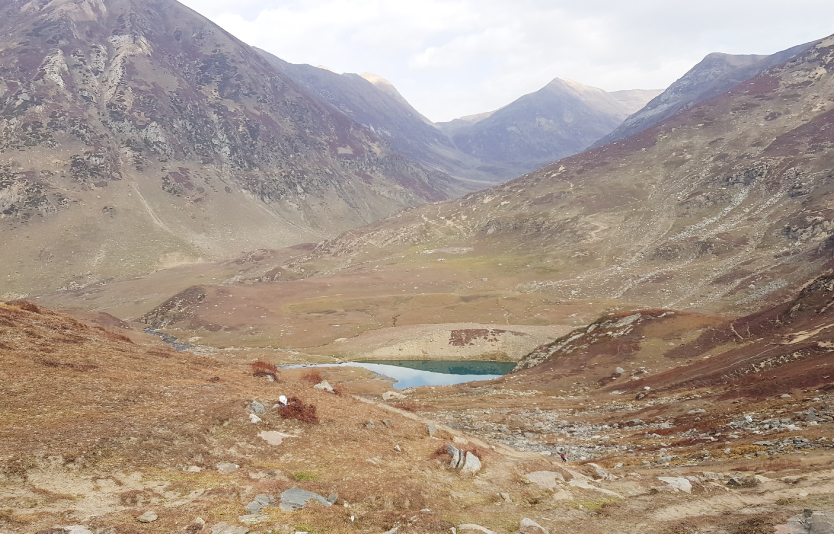
Trek To Ratti Gali Lake, Neelum Valley, Azad Kashmir
Best Campsites Ratti Gali: Where to Pitch Your Tent
Choosing the right campsite makes the difference between comfortable rest and miserable nights. Several established camping spots dot the trail, each with distinct advantages.
Lower Meadow Camp (2,800 meters)
The first major camping area appears about 3 hours into the trek. Green meadows stretch flat enough for comfortable sleeping, and a stream provides fresh water. This spot works well for families or trekkers needing extra acclimatization time.
Advantages:
- Relatively flat terrain
- Abundant water source
- Protected from high-altitude winds
- Lower elevation reduces altitude sickness risk
Drawbacks:
- Longer distance to lake next day
- Can get crowded during peak season
- Grazing animals sometimes wander through
Upper Alpine Camp (3,200 meters)
Located approximately 5-6 hours from Dowarian, this represents the most popular camping choice for the best campsites ratti gali trek. The views from here surpass the lower camp, with mountain walls rising dramatically on three sides.
Advantages:
- Shorter distance to lake (3-4 hours)
- Spectacular mountain views
- Usually has guide/porter camps nearby
- Better weather protection from surrounding peaks
Drawbacks:
- Colder temperatures
- Steeper terrain requires careful tent placement
- Water source involves slight downhill walk
High Camp (3,500 meters)
Experienced trekkers sometimes push to this highest camp, just 1-2 hours from the lake. Only attempt this if you've acclimatized properly and weather looks favorable.
Advantages:
- Sunrise over lake within easy reach
- Maximum solitude
- Stunning stargazing opportunities
Drawbacks:
- Significant altitude sickness risk
- Extremely cold overnight
- Limited flat spaces
- Water sources may be frozen
Snow Bridge Crossing: Safety and Technique
One of the ratti gali lake trek's most thrilling and nerve-wracking moments comes when crossing streams via snow bridges. These natural formations occur where snow accumulates over flowing water, creating temporary bridges.
When Snow Bridges Appear:
Early season (May-June): Most streams have solid snow bridges Mid-season (July-August): Bridges start melting, some crossings require wading Late season (September-October): Few snow bridges remain, rock hopping common
Safe Crossing Techniques:
The first crossing typically happens about 2 hours into the trek. Your guide will test the snow bridge crossing stability before allowing passage. Here's what you need to know:
- Cross one person at a time (weight distribution matters)
- Follow the guide's exact footsteps
- Move steadily but don't rush
- Keep trekking poles ready for balance
- Remove backpack waist strap (easier escape if you fall through)
- Never cross during afternoon heat (bridges weaken)
Depending on the season and snowfall, trekkers may encounter one to several stream crossings, some of which may involve snow bridges early in the season. The water runs glacial cold—literally ice melt—so keeping feet dry becomes priority. Waterproof boots help, but many trekkers carry spare socks for inevitable wet feet situations.
If a snow bridge looks questionable, guides find alternative routes or assist with stream wading. Trust their judgment—they know this trail intimately and your safety depends on their experience.
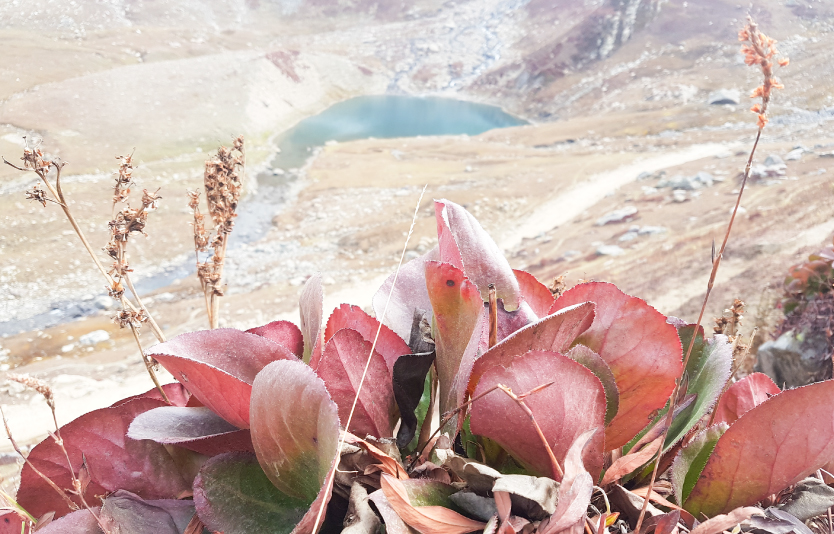
Trek To Ratti Gali Lake, Dowarian, Neelum Valley, Azad Kashmir
Wildflower Season Pakistan: Nature's Mountain Garden
From late June through August, the meadows explode with color during wildflower season pakistan's mountains celebrate. The ratti gali lake trek transforms into a botanical wonderland that rivals famous flower destinations worldwide.
Common Wildflowers You'll Encounter:
- Blue poppies (rare, highly prized by photographers)
- Primulas in yellow, pink, and purple varieties
- Potentilla (bright yellow ground cover)
- Gentians (deep blue trumpet flowers)
- Wild roses (pink clusters on thorny bushes)
- Edelweiss (white star-shaped mountain flowers)
The diversity amazes even casual observers. Entire hillsides glow purple, yellow meadows stretch toward glaciers, and delicate blue poppies hide among rocks. Photographers spend hours capturing these fleeting displays.
Best Wildflower Timing:
- Peak bloom: Mid-July to early August
- Early flowers: Late June (lower elevations)
- Late blooms: Late August to early September (higher meadows)
Remember: Look but don't pick. These alpine ecosystems remain fragile, and flowers contribute to the mountain's ecological balance. Take photos, leave only footprints.
Essential Gear for the Lake Trekking Guide Experience
Proper equipment separates comfortable adventure from dangerous misery. This lake trekking guide emphasizes preparation.
Must-Have Items:
- Four-season tent (temperatures drop below freezing at night)
- Sleeping bag rated to -10°C minimum
- Insulated sleeping pad (ground cold seeps through thin pads)
- Waterproof hiking boots (ankle support crucial)
- Gaiters (keep snow and water out)
- Trekking poles (invaluable for stream crossings and descents)
- Layered clothing system (base, insulation, waterproof shell)
- Sun protection (sunglasses, SPF 50+ cream, lip balm)
- Water purification tablets or filter
- High-energy snacks (altitude suppresses appetite)
- First aid kit including altitude sickness medication
- Headlamp with extra batteries
What to Leave Behind:
- Heavy cotton clothing (stays wet forever)
- Single-layer jackets (temperature swings require layers)
- New, unbroken boots (blisters ruin treks)
- Excessive electronics (minimal charging options)
Many tour companies provide tents, sleeping bags, and cooking equipment. Confirm what's included before packing your own heavy gear.
Hiring Guides and Porters
While technically possible to trek independently, hiring local guides dramatically improves safety and experience. They know weather patterns, manage stream crossings, and handle emergencies.
Guide Costs:
- PKR 3,000-4,000 per day (experienced, English-speaking)
- PKR 2,000-2,500 per day (basic guide)
Porter Costs:
- PKR 2,000-3,000 per day
- Typically carry up to 20kg
Guides also cook meals if you arrange food supplies in advance. Most speak at least basic English and share fascinating stories about the region's history and culture.
Physical Preparation and Altitude Considerations
The ratti gali lake trek challenges even fit hikers. The combination of elevation gain, high altitude, and variable terrain requires preparation.
Training Recommendations (8-12 weeks before):
- Regular hiking with weighted backpack
- Cardio exercises (running, cycling, swimming)
- Stair climbing for uphill endurance
- Core strengthening exercises
Altitude Sickness Prevention:
- Ascend gradually (don't rush to high camps)
- Stay hydrated (drink 3-4 liters daily)
- Avoid alcohol before and during trek
- Consider Diamox medication (consult doctor)
- Descend immediately if severe symptoms develop
Symptoms like headache, nausea, and fatigue affect most trekkers to some degree. They usually pass with rest and hydration. However, severe symptoms (confusion, difficulty breathing, inability to walk straight) require immediate descent.
Best Trekking Season
Season | Temperature Range | Trail Conditions | Best For | Challenges |
May-June | 5-15°C | Snow bridges intact, some trail sections snow-covered | Early season solitude, photography | Cold nights, limited wildflowers, snow hazards |
July-August | 10-20°C | Clear trails, peak accessibility | Wildflowers, comfortable weather, best campsites ratti gali | Crowded, afternoon rain showers, melting snow bridges |
September | 5-15°C | Excellent visibility, stable weather | Crystal clear views, fewer crowds | Flowers fading, colder temperatures, shorter days |
Winter: From October to April, trekking is strongly discouraged due to heavy snow, avalanches, and lack of access, rather than an officially closed trail.
Frequently Asked Questions
How difficult is the Ratti Gali Lake trek for beginners?
The ratti gali lake trek falls into the moderate-to-challenging category. Beginners with good fitness levels can complete it successfully, but prior trekking experience helps tremendously. The altitude presents the biggest challenge—many first-time high-altitude trekkers struggle regardless of fitness. If this is your first mountain trek, consider hiring a guide, taking three days instead of two, and training specifically for elevation and endurance. Previous experience with multi-day camping and 6+ hour hikes makes this trek much more manageable.
What's the total cost for this trek per person?
Budget trekkers arranging everything independently spend PKR 10,000-15,000 (including transport from Muzaffarabad, guide, basic food, and camping). Mid-range trekkers using tour companies pay PKR 35,000-50,000 per person for comprehensive packages including all meals, equipment, guides, porters, and transportation. Luxury packages with better food, comfortable camping gear, and smaller group sizes cost PKR 60,000-80,000 per person. These estimates exclude personal gear and travel to Muzaffarabad. Sharing costs among groups reduces per-person expenses significantly.
Can the trek be done without camping or is overnight stay mandatory?
Technically, very fit and fast trekkers could attempt Ratti Gali as a long day hike (12-14 hours round trip), but this isn't recommended. The altitude, distance, and terrain make this unsafe and exhausting. Nearly all trekkers camp at least one night. The lake trekking guide experience involves watching sunset over mountains, stargazing from high camps, and waking to alpine sunrise—aspects you'd completely miss on a rushed day trip. Plan for at least one overnight camp, preferably two for proper enjoyment and altitude acclimatization.
Begin Your Ratti Gali Lake Trek Adventure
The ratti gali lake trek delivers everything trekkers dream about: challenging terrain that rewards effort, natural beauty that exceeds expectations, and memories that last forever. Whether you're crossing snow bridges with heart pounding, photographing wildflowers during pakistan's spectacular mountain summer, or setting up camp at the best campsites ratti gali offers, every moment contributes to an extraordinary adventure.
Before you can stand beside that turquoise glacial lake, sorting your travel documentation matters. GVC simplifies Pakistan visa applications, handling the paperwork while you focus on training and gear preparation. Their Pakistan visa services streamline the process, and you can easily track your application progress throughout.
This lake trekking guide provides the framework, but your trek creates its own unique story. Maybe you'll discover a hidden wildflower meadow, capture the perfect reflection photograph, or simply find that moment of mountain peace that makes all the effort worthwhile. Check the visa service pricing today and start planning your ratti gali lake trek. The snow bridges await, the wildflowers will bloom again, and those turquoise waters reflect skies just waiting for your arrival. The mountains are calling—answer with proper preparation and an adventurous spirit.
Related Articles:
- Discover The Most Beautiful Valley In Pakistan: Heaven On Earth Awaits
- Hunza To Skardu: Exploring Pakistan’s Northern Paradise
- Karachi To Skardu Distance: A Journey Through Pakistan’s Scenic Wonders
- Azad Kashmir – Travel Guide (Permit Awareness And Routes)
- Pakistan Travel Safety: What You Need To Know Before Visiting
- Swat Tour: The Ultimate Family Guide To Pakistan’s Switzerland
- Passu Cones And Glacier Viewpoints: Ultimate Photography Spots On The KKH
Tags