Thatta and Makli Necropolis: UNESCO Tomb Art and Craft Villages
September 12, 2025
Just 98 kilometers east of Karachi lies a remarkable window into the past – the ancient city of Thatta and its extraordinary Makli Necropolis. This UNESCO World Heritage Site contains one of the world's largest funerary complexes, with tombs and monuments spanning nearly 500 years of history. For travelers seeking cultural depth beyond Pakistan's more famous northern attractions, this archaeological wonderland offers an unforgettable journey through dynasties that once ruled the region.
The historical significance of Thatta extends beyond its famous necropolis. Once a thriving medieval port city and capital of lower Sindh, During the 14th to 17th centuries, Thatta flourished as a key medieval port city connecting Sindh’s river trade to the Arabian Sea. Today, the town and its surrounding craft villages provide insight into both Pakistan's remarkable past and its living cultural traditions.
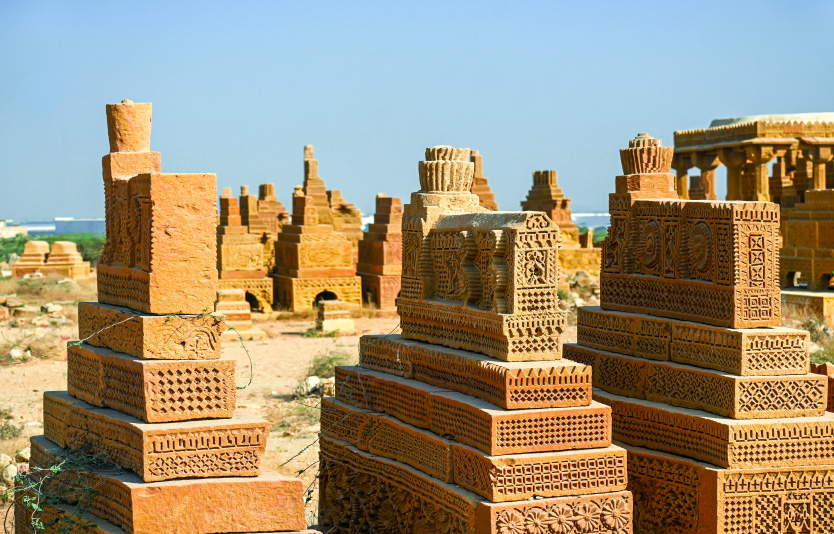
Thatta and Makli Necropolis
Getting to Thatta and Makli: The Journey from Karachi
The journey to Thatta makes an ideal day trip or overnight excursion from Karachi. Several transportation options connect Pakistan's largest city to this historical treasure:
Private Vehicle: The most convenient option takes approximately 2 hours via the National Highway (N-5). The N-5 highway is generally well-maintained, though occasional rough patches appear as you approach Thatta.
Public Bus: Regular buses depart from Karachi's Sohrab Goth Bus Terminal, taking 2.5-3 hours depending on stops. These economical options provide a glimpse into local life but offer less flexibility for exploration.
Tour Operators: Numerous Karachi-based companies offer guided day tours that include transportation, knowledgeable guides, and sometimes meals. These typically depart early morning (around 7-8 AM) and return by evening.
For independent travelers, consider these practical tips:
- Start early to avoid midday heat, especially between April and October
- Carry sufficient water and snacks as facilities are limited at the sites
- Wear comfortable walking shoes and sun protection
- Consider hiring a local guide at the entrance for deeper historical context
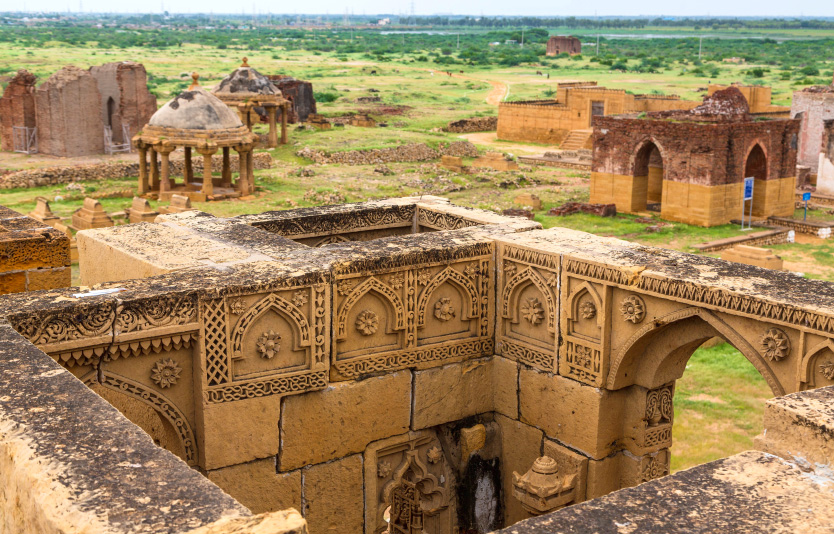
The Makli Necropolis contains an estimated half a million to one million tombs
Exploring Makli Necropolis: One of the World's Greatest Funerary Sites
Spread across a limestone ridge covering nearly six square kilometers, the Makli Necropolis contains an estimated 500,000 to one million tombs. This vast cemetery served as the final resting place for royalty, scholars, philosophers, and military leaders from the 14th to 18th centuries during the Samma, Arghun, Tarkhan, and Mughal periods.
The architectural styles display a fascinating blend of influences:
- Persian-style blue glazed tilework
- Hindu construction and decorative elements
- Indigenous Sindhi artistic motifs
- Islamic calligraphy and geometric patterns
Major monuments not to miss include:
Jam Nizamuddin's Tomb (Samma Dynasty): Built in 1509, this square structure features delicate stone latticework and blue tile decoration that showcases the height of Samma artistry.
Isa Khan Tarkhan's Tomb: This two-story sandstone mausoleum stands out with its distinctive canopied upper level and intricate floral carvings. Built in 1644, it represents the zenith of stone carving in the region.
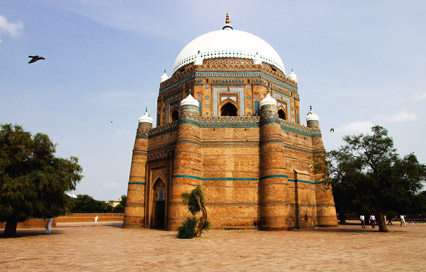
Diwan Shurfa Khan's Tomb: A masterpiece of brick and tile work with vibrant blue and turquoise geometric patterns covering the exterior.
Mirza Tughral Beg's Tomb: Features some of the site's most elegant calligraphy and decorated with delicate carvings of lotus flowers – a prime example of Hindu-Muslim artistic fusion.
When exploring the necropolis, consider these tips:
- The site is vast – allocate at least 2-3 hours for proper exploration
- Early morning and late afternoon offer the best light for photography
- Many tombs remain in active use for prayer – respect religious observances
- Main monuments have information boards, but guides provide valuable context about artistic details easily missed
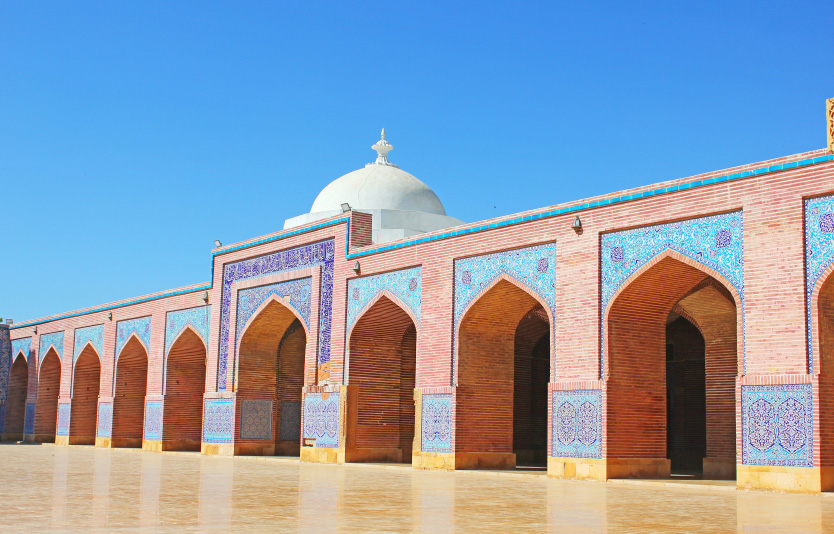
Shah Jahan Mosque
Shah Jahan Mosque: Thatta's Magnificent Mughal Monument
Beyond the necropolis, Thatta's most significant structure is the Shah Jahan Mosque, built in 1647 during the reign of the famous Mughal emperor. Unlike the red sandstone construction typical of many Mughal mosques, this architectural gem features distinctive white marble and red brick.
The mosque's most remarkable feature is its incredible acoustics – a whisper at one end of the main chamber can be clearly heard at the opposite side. This engineering marvel is achieved through the precise arrangement of 93 domes and 33 arches.
Other notable elements include:
- Intricate geometric blue tile work throughout the interior
- A sophisticated underground water collection system
- Ninety-three small domes creating a unique exterior silhouette
- Exquisite mihrab (prayer niche) with stellar kaleidoscope patterns
The mosque remains an active place of worship:
- Non-Muslim visitors are welcome outside prayer times
- Dress modestly with shoulders and knees covered
- Women should bring a scarf to cover their heads when entering
- Remove shoes before entering the prayer hall
- Photography is permitted but be respectful of worshippers
Craft Villages Around Thatta: Living Cultural Heritage
Several traditional craft villages in the wider Thatta–Matiari region continue to preserve age-old textile and pottery traditions. Several small villages specialize in techniques passed through generations:
Kalan Village: Known for ajrak, the traditional Sindhi blockprinted textile with indigo and madder root natural dyes. Watching artisans stamp complex geometric patterns using hand-carved wooden blocks offers insight into a process little changed over centuries.
Nasarpur’s pottery reflects stylistic influences reminiscent of ancient Indus traditions, though the techniques have evolved over time
Hala: Though slightly further (about 30 kilometers north), this larger craft center is worth the journey for its renowned lacquered woodwork, handloom textiles, and traditional jewelry production.
Visiting these villages provides not only shopping opportunities but authentic cultural exchanges with master artisans:
- Many workshops welcome visitors to observe production
- Quality pieces make meaningful souvenirs with cultural significance
- Prices are often negotiable but remain reasonable compared to city shops
- Purchasing directly supports traditional livelihoods
Site | Time Needed | Best Visiting Hours |
Makli Necropolis | 2-3 hours | 8:00-11:00 AM or 3:00-5:00 PM |
Shah Jahan Mosque | 1 hour | 9:00 AM-5:00 PM (avoid prayer times) |
Craft Villages | 1-2 hours each | Morning hours when production is active |
Practical Information for Visitors
Accommodation Options: While many visitors make Thatta a day trip from Karachi, staying overnight allows more relaxed exploration:
- Thatta has a few basic guesthouses with limited facilities
- The PTDC Motel in Thatta has been intermittently operational, so it’s best to confirm availability in advance.
- Some visitors prefer returning to Karachi or continuing to nearby Hyderabad for better accommodation
Best Seasons to Visit:
- October to March offers pleasant temperatures (15-25°C)
- Avoid summer months (May-August) when temperatures regularly exceed 40°C
- The sites remain open year-round with minimal seasonal closures
Cultural Considerations:
- Dress modestly out of respect for local customs
- Ask permission before photographing local people
- Small donations are appropriate at actively maintained tombs
- Guides typically expect 1000-1500 PKR (approximately $5-8) for a comprehensive tour
How much time should I allocate for visiting Thatta and the Makli Necropolis?
While ambitious travelers can see the highlights in a day trip from Karachi, a more relaxed exploration benefits from an overnight stay. The Makli Necropolis alone requires 2-3 hours to appreciate properly, while the Shah Jahan Mosque deserves at least one hour. Adding craft village visits extends your itinerary by several hours. A comprehensive visit follows this pattern: Day 1: Morning departure from Karachi, afternoon exploration of Makli's main monuments, overnight in Thatta. Day 2: Morning visit to the Shah Jahan Mosque, followed by craft village tours before returning to Karachi by evening. This pacing allows time for meaningful interaction with local artisans and proper appreciation of the architectural details that make these sites exceptional. For photography enthusiasts, the extra time enables capturing the monuments in different lighting conditions.
What makes Makli Necropolis a UNESCO World Heritage Site?
Makli earned UNESCO World Heritage status in 1981 due to several exceptional attributes. First, it represents one of the world's largest necropolises with an estimated 500,000 to one million graves spread over six square kilometers. Second, its monuments showcase an extraordinary fusion of diverse architectural styles spanning nearly 500 years (14th-18th centuries), including influences from Mughal, Persian, Central Asian, and indigenous Sindhi traditions. Third, the site demonstrates remarkable craftsmanship in stone carving, tilework, and calligraphy that reached artistic heights rarely seen elsewhere. Fourth, the necropolis serves as an exceptional historical record of successive dynasties (Samma, Arghun, Tarkhan, and Mughal) that ruled the region. Finally, many tombs remain in excellent condition despite their age, providing rare intact examples of medieval Islamic funerary architecture. These factors combine to make Makli an irreplaceable testament to cultural synthesis and artistic achievement that transcends regional significance.
Is hiring a guide necessary at the Makli Necropolis?
While not mandatory, hiring a knowledgeable local guide significantly enhances the Makli experience. The necropolis covers an enormous area with hundreds of significant structures, making navigation challenging for first-time visitors. More importantly, many of the site's most fascinating details—hidden symbolism in carvings, the historical significance of specific tombs, and the evolution of architectural styles—remain invisible without proper interpretation. Official guides can be hired at the site entrance for approximately 1000-1500 PKR ($5-8) and typically speak sufficient English for basic communication. For deeper historical context, arranging a guide with stronger language skills through your hotel or a tour company in Karachi is recommended. Photography enthusiasts benefit particularly from guides who know optimal angles and lighting conditions for specific monuments. Self-guided exploration remains possible using printed guidebooks or digital resources, but the modest guide fee represents excellent value for the historical depth and cultural insights provided.
The journey to Thatta and Makli offers a profound connection to Pakistan's rich past that contrasts with the bustling modernity of nearby Karachi. Here, centuries of history remain etched in stone – intricate carvings and elegant architecture telling stories of bygone rulers and the skilled artisans who immortalized them. Beyond the magnificent monuments, the living traditions of surrounding craft villages demonstrate cultural continuity despite centuries of change.
For travelers willing to venture beyond Pakistan's more famous destinations, this UNESCO World Heritage Site rewards with historical depth, architectural splendor, and authentic cultural experiences. In the weathered stone of Makli's tombs and the careful hands of Thatta's modern artisans, visitors find compelling evidence of Pakistan's significant contributions to world heritage and ongoing artistic traditions.
Planning Your Visit to Thatta and Makli Necropolis: Travel Documentation Guide
Before embarking on your cultural exploration of Thatta and the magnificent Makli Necropolis, ensuring your travel documentation is properly arranged will create a smooth experience. Pakistan requires visitors from most countries to obtain appropriate entry permits before arrival. While these extraordinary UNESCO heritage sites await, addressing the practical aspects of international travel is essential first.
For convenience and efficiency, many travelers choose to obtain their Pakistani visa through specialized services that streamline the application process. After submitting your application, you can easily review your application status online, allowing you to focus on planning your cultural heritage tour rather than paperwork concerns.
The remarkable tomb architecture and living craft traditions around Thatta attract history enthusiasts and photographers from around the world. Before finalizing your itinerary to explore these archaeological treasures, ensure you understand the fee structure for visa processing based on your nationality and travel needs. Processing typically takes 7-14 business days for Pakistan visas, so factor this timeframe into your travel planning.
Once your documentation is secured and your journey to explore these remarkable heritage sites is confirmed, you can turn your attention to the extraordinary experiences that await – from marveling at centuries-old stone carvings and brilliant tile work at Makli Necropolis to witnessing traditional ajrak textile printing in the surrounding villages that maintain Sindh's ancient craft traditions.
Related Articles:
- Karachi Sightseeing: A Journey Through The City's Best Attractions
- Discover The Wonderful Of Best Tourist Attractions Pakistan For Travelers
- Pakistan Travel Guide: Discover The Gems Of South Asia
- Karachi To Gwadar: Finding Your Favorite Way To Travel
- Hidden Treasures Of Balochistan Pakistan
- Islamabad To Karachi: A Journey Between Pakistan's Icons
- Lahore To Karachi: A Complete Journey From East To West
Tags