Bandung Art Deco Walking Tour: Braga Street Facades, Heritage Cafes and Colonial Architecture
Walking down Braga Street in Bandung feels like stepping onto a 1920s film set. The curved balconies, geometric patterns, and pastel-colored facades transport you to an era when this Indonesian city was known as the "Paris of Java." Unlike many Asian cities where colonial-era architecture has largely disappeared, Bandung has retained a notable concentration of Art Deco buildings, particularly along Braga Street.
The Braga Street walk has become a pilgrimage for architecture enthusiasts and history lovers. This isn't just about admiring pretty buildings—it's about understanding how Dutch colonial influence shaped modern Indonesian culture. Every cafe, every restored facade, and every vintage shopfront tells a story about this mountain city's golden age.
Let me guide you through the best route, the most photogenic spots, and the hidden details that make this Bandung architecture tour unforgettable.
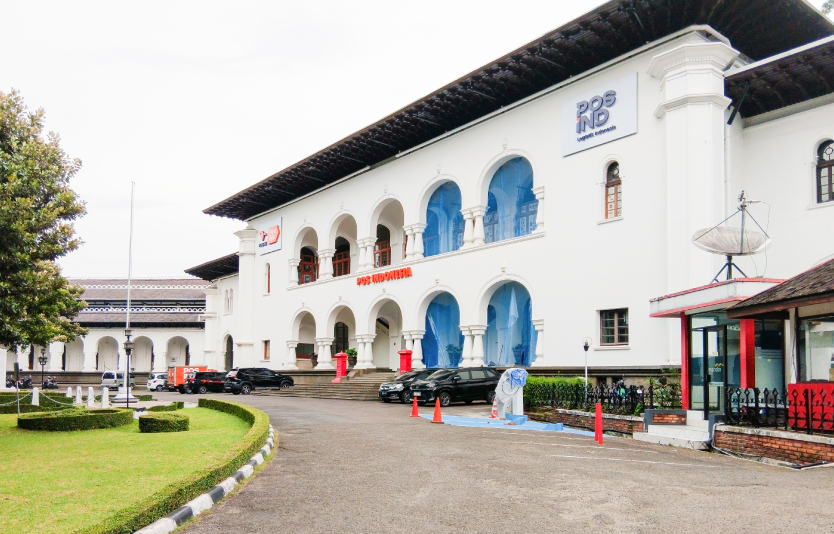
Gedung Sate, Bandung’s iconic government building, reflects a blend of Dutch colonial architecture and local influences
The History Behind Braga Street's Glory Days
Braga Street emerged as Bandung's premier shopping and entertainment district during the 1920s and 1930s. Wealthy Dutch planters would drive down from their tea plantations in the surrounding highlands to shop at exclusive boutiques and dine at sophisticated restaurants.
The street's architecture reflects the Art Deco movement that swept through Europe and its colonies during this period. Local architects blended European modernism with tropical practicality, creating a unique style you won't find anywhere else. Wide overhangs protect pedestrians from sudden tropical downpours. Large windows capture cross breezes in the pre-air conditioning era. Decorative elements incorporate both Dutch geometric patterns and Indonesian motifs.
By the 1950s, after Indonesian independence, Braga Street began its decline. Many Dutch residents left, and the area fell into disrepair. The turning point came in the early 2000s when preservation efforts brought new life to these forgotten buildings. Today, Bandung colonial buildings along Braga Street house modern businesses while maintaining their historical character.
Starting Your Braga Street Walk: The Northern Gateway
Begin your walking tour at the Gedung Merdeka (Independence Building) on Jalan Asia-Afrika, just a five-minute walk from Braga's northern entrance. This landmark hosted the 1955 Asian-African Conference, a pivotal moment in post-colonial history.
From here, head toward Braga Street's northern end near the intersection with Jalan Naripan. The walk covers roughly 500 meters, but plan for at least two hours to properly appreciate the architecture and stop at heritage cafes.
Key Buildings Along the Northern Section:
- Gedung Denis Bank – A restored 1920s Art Deco building that has been repurposed for modern commercial use while retaining its original facade.
- The Savoy Homann Hotel has long been associated with prominent historical figures, including President Sukarno, and remains one of Bandung’s most storied colonial-era hotels
- Majestic Theatre Building - The curved corner facade demonstrates how architects adapted Art Deco principles to tropical climates
The best time for photography is early morning (7-9 AM) when soft light hits the eastern facades and streets remain relatively empty. Weekend mornings bring more pedestrian traffic but also street musicians and food vendors that add atmosphere.
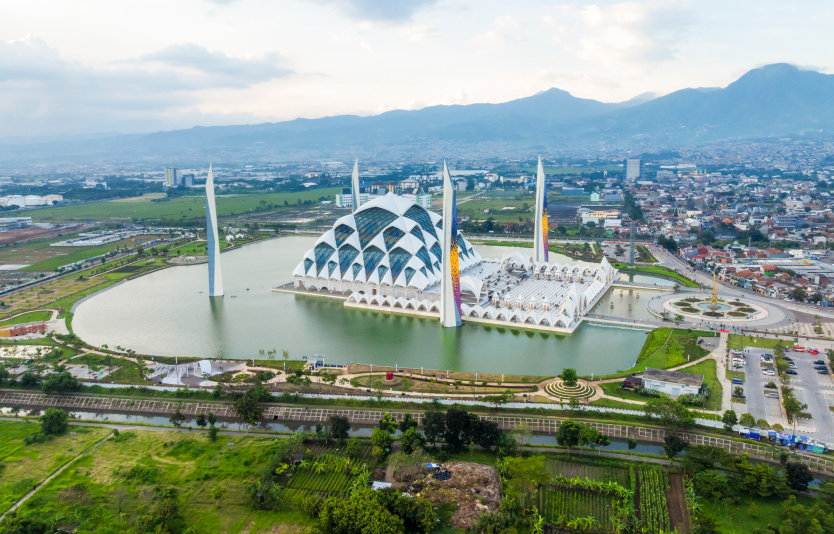
A breathtaking aerial view of Al-Jabbar Grand Mosque in Bandung, Indonesia
Exploring Bandung Heritage Cafes: Where History Meets Coffee
The revival of Braga Street centered on transforming colonial-era buildings into specialty cafes and restaurants. These Bandung heritage cafes maintain original architectural elements while serving modern Indonesian and international cuisine.
Braga Permai Restaurant
This iconic establishment opened in 1923 and still occupies its original building. The high ceilings, terrazzo floors, and wooden shutters remain unchanged. Order their famous Nasi Goreng Braga while sitting near the large windows facing the street. Prices range from 35,000-75,000 IDR ($2.30-$5 USD) per dish.
The walls display black-and-white photos showing Braga Street's transformation over decades. Staff members can share stories about regular customers whose grandparents dined here in the 1930s.
Kopi Toko Djawa
Housed in a restored shophouse, this specialty coffee roaster highlights Indonesian beans from across the archipelago. The interior preserves original tile work and wooden beams while adding contemporary furniture. Their cold brew served in vintage glassware costs around 25,000 IDR ($1.65 USD).
The baristas are passionate about explaining different Indonesian coffee regions. Ask about their West Java varieties grown in Bandung's surrounding mountains.
Braga Art Cafe
This gallery-cafe combination occupies a former textile shop. The Art Deco facade features geometric reliefs and original signage. Inside, rotating exhibitions showcase local artists alongside antique furniture pieces. Entry is free if you order a drink (starting at 20,000 IDR/$1.30 USD).
Heritage Cafe | Specialties | Price Range |
Braga Permai | Indonesian classics, historical ambiance | 35,000-75,000 IDR |
Kopi Toko Djawa | Specialty Indonesian coffee, restored interior | 20,000-45,000 IDR |
Braga Art Cafe | Gallery space, light meals, Art Deco details | 20,000-60,000 IDR |
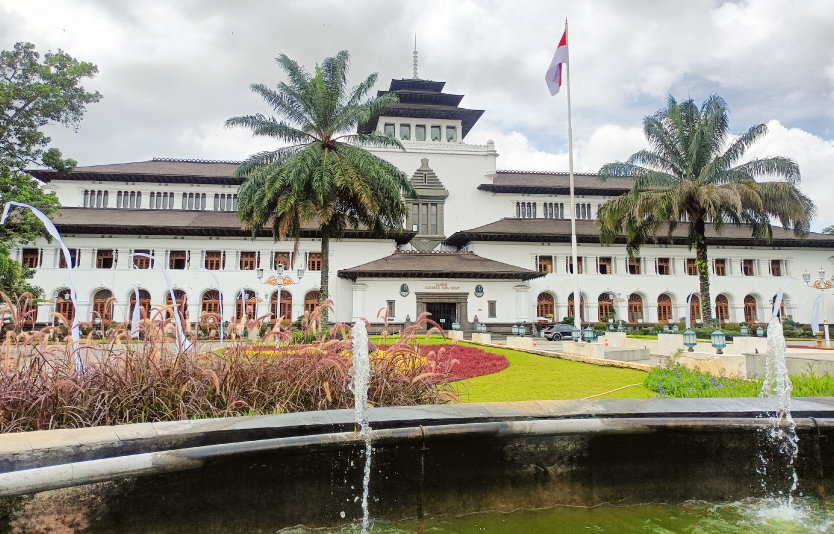
Gedung Sate in Bandung, an iconic building in Bandung and the official office of the West Java
Architectural Highlights: Details Worth Noticing
What makes the Bandung city stroll along Braga Street special isn't just the obvious grand facades—it's the small details that reveal how much care went into these buildings.
Look Up at the Rooflines
Many buildings feature decorative parapets with geometric patterns or stylized tropical motifs. The stepped zigzag patterns typical of Art Deco appear alongside Indonesian cloud and mountain designs. These hybrid elements show how local craftsmen interpreted European architectural trends.
Examine the Doorways
Original brass door handles, etched glass panels, and carved wooden frames survive in several buildings. The entrance to the old Concordia Society building (now a bank) features an elaborate door surround with tropical flowers rendered in the angular Art Deco style.
Check the Tile Work
Ground floor facades and interior floors showcase amazing tile craftsmanship. Some buildings imported Dutch tiles, while others used locally produced ceramics. The color palettes—mint green, coral pink, cream, and terracotta—create that distinctive tropical Art Deco look.
Notice the Windows
Large casement windows with wooden shutters appear throughout Braga Street. These weren't just aesthetic choices—they allowed natural ventilation crucial in Bandung's climate. The geometric window grilles combine security with style.
The Mid-Section: Where Old Meets New
The central portion of Braga Street shows the most dramatic transformation. Here, adaptive reuse projects have turned forgotten commercial buildings into thriving businesses while respecting original architecture.
Modern Interventions Done Right:
Several fashion boutiques occupy restored shophouses. They've kept original facades intact while updating interiors with contemporary fixtures. The contrast between 1920s exteriors and minimalist modern interiors creates striking visual experiences.
A former cinema now operates as a cultural center hosting film screenings and art exhibitions. The building's curved corner and vertical signage tower remain preserved, even though the interior was completely renovated.
Practical Walking Tour Tips
Getting There:
From Bandung's main train station (Stasiun Bandung), Braga Street is a 10-minute walk or a 15,000 IDR ($1 USD) taxi ride. If staying in the Dago area, plan for 15-20 minutes by car depending on traffic.
Best Walking Route:
Start at the northern end near Gedung Merdeka around 8 AM. Walk south slowly, stopping at cafes and buildings that catch your attention. The entire 500-meter stretch takes 1.5-2 hours at a relaxed pace. Finish at the southern end near Alun-Alun Bandung (city square) where you can explore more colonial-era buildings.
What to Bring:
- Comfortable walking shoes (the sidewalks can be uneven)
- Sun protection (limited shade during midday)
- Camera with charged batteries
- Indonesian rupiah for cafe stops and tips
- Light jacket (Bandung's elevation makes mornings cool)
Avoiding Crowds:
Weekday mornings offer the quietest experience. Friday nights and weekends bring heavy foot traffic, especially from 6-10 PM when locals promenade along the street. If you want atmospheric evening photos with crowds and lights, weekend evenings deliver. For architectural photography, stick to weekday mornings.
Guided Tours vs. Self-Guided:
Self-guided walks work perfectly well. Most buildings have small plaques with construction dates and original purposes. However, local architecture tours (available through hotels for 200,000-300,000 IDR/$13-$20 USD per person) provide historical context you'd otherwise miss.
Beyond Braga: Extending Your Architecture Tour
Once you've covered Braga Street, several nearby areas showcase more Bandung colonial buildings worth exploring.
Jalan Asia-Afrika runs parallel to Braga and features impressive government buildings and hotels from the same era. The Gedung Merdeka and Savoy Homann Hotel anchor this street.
Alun-Alun Bandung, the city square at Braga's southern end, is surrounded by colonial administrative buildings now housing banks and offices. The buildings create a cohesive architectural ensemble.
Jalan Riau presents a mix of residential Art Deco villas. These smaller-scale buildings show how the architectural style influenced domestic architecture. Some now operate as boutique hotels or restaurants.
Photographing Your Bandung Architecture Tour
Best Angles:
Shoot from across the street to capture entire facades without distortion. The relatively narrow street width means wide-angle lenses work best (24-35mm equivalent).
For detail shots, focus on doorways, window grilles, and roofline ornaments. These elements photograph well in any light condition.
Lighting Considerations:
Morning light (7-10 AM) illuminates eastern facades beautifully. Late afternoon (4-6 PM) creates dramatic shadows that emphasize architectural details. Overcast days actually work great for architectural photography, providing even lighting without harsh shadows.
Respectful Photography:
Some heritage cafes and shops welcome interior photography if you ask permission first. Always order something before photographing inside establishments. Avoid photographing local residents without permission—this is their neighborhood, not just a tourist attraction.
Frequently Asked Questions
How much time should I allocate for a complete Braga Street walk?
A thorough exploration takes 2-3 hours including cafe stops and building observation. If you're passionate about architecture and want to photograph everything, plan for a full morning (4 hours). Speed walkers who just want highlights can cover the main points in 90 minutes, though you'll miss the nuanced details that make this walk special. Consider splitting your visit across two days—morning for photography and evening to experience the street's atmosphere with locals.
Are the heritage cafes expensive compared to regular Bandung restaurants?
Heritage cafes charge slightly more than typical warungs (local eateries) but remain reasonable by tourist standards. Expect to pay 50,000-100,000 IDR ($3.30-$6.60 USD) per person for a meal with drinks at heritage establishments, compared to 25,000-40,000 IDR at regular restaurants. The premium buys you historical ambiance and building preservation—money well spent considering the unique experience. Many cafes offer affordable coffee and snacks if full meals exceed your budget.
Is Braga Street safe for solo travelers and female visitors?
Braga Street is generally considered a safe and well-patrolled area, especially during daytime and early evening hours. Solo travelers and women walking alone face minimal safety concerns. Standard precautions apply—keep valuables secure and stay aware of your surroundings. The area gets very quiet after 10 PM, so plan evening visits for earlier hours when cafes and shops remain open. Local residents are generally friendly and helpful if you need directions.
Discovering Braga Street Walk and Bandung Heritage Cafes on Your Indonesian Adventure
A Braga Street walk offers more than architectural appreciation—it's a journey through Indonesia's complex colonial history and modern cultural revival. The careful restoration of Bandung heritage cafes and colonial facades demonstrates how cities can honor their past while building vibrant contemporary communities. Whether you're an architecture enthusiast, history buff, or simply someone who enjoys atmospheric urban exploration, this Bandung city stroll delivers authentic experiences that standard tourist attractions can't match.
Planning your Indonesian journey to explore Bandung's Art Deco treasures? Securing your Indonesia visa starts with GVC's streamlined application process. Their efficient service handles documentation requirements, letting you focus on planning your Braga Street itinerary and booking those heritage cafe reservations. Throughout processing, you can monitor your visa application status online for complete peace of mind. With competitive visa service pricing and transparent fees, GVC removes travel planning stress. The Art Deco facades and colonial-era cafes of Braga Street await your discovery, ready to share their stories of a bygone era preserved for modern travelers.
Related Articles:
- Kota Tua Heritage Loop Museums Photography Bike Rental Guide
- Indonesia's World Heritage Sites Guide To Its UNESCO Treasures
- Best Things To Do In Indonesia Makes You Want To Visit Again
- Best Places To Visit In Indonesia For Your Travel Bucket List
- Top Must Visit Attractions In Bali Ultimate Bucket List
- Bali Gates Of Heaven Traveler's Guide To Heaven's Gate Temple
- Indonesian National Holidays Celebration Of Diversity And Culture
Tags