Mount Rinjani Alternatives: Crater Rim Mini-Treks and Sunrise Points
The guide looked at me with genuine concern. "You understand this is three days, very difficult climbing?" He wasn't exaggerating. Mount Rinjani's famous trek involves 16+ hours of hiking, sleeping in basic camps, and pushing through physical exhaustion that leaves even fit travelers questioning their life choices. At 3,726 meters, Mount Rinjani is Indonesia’s highest active volcano.
But here's what most travel blogs won't tell you: you don't need to complete the full Mount Rinjani expedition to experience the magic of Lombok's volcanic landscapes. Several Rinjani alternatives offer stunning crater rim views, spectacular sunrise points, and mini treks that deliver the mountain's beauty without the multi-day suffering. After exploring these options across two visits to Lombok, the alternatives sometimes felt more rewarding than the main trek itself—and certainly more accessible for travelers with limited time, moderate fitness levels, most standard Rinjani treks involve 1–2 nights of camping rather than three.
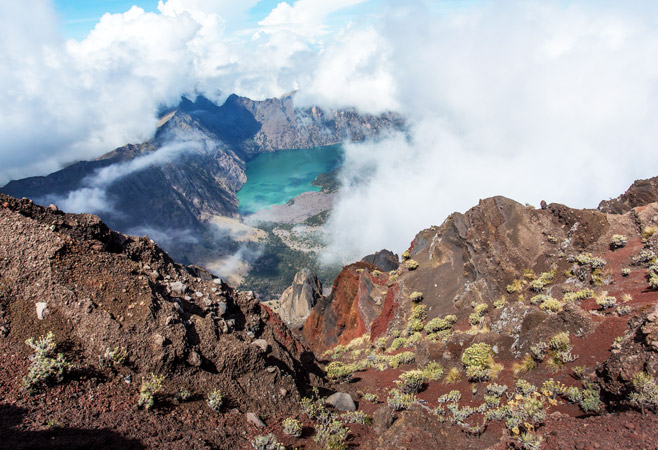
Mount Rinjani
Why Consider Mount Rinjani Alternatives
The full Rinjani trek costs 2,500,000-4,000,000 IDR ($165-265) depending on route and package. You'll need three days minimum, proper gear, reasonable fitness, and strong knees for the brutal descents. Weather closures during rainy season (November-March) can cancel trips last-minute after you've already committed time and money.
Mount Rinjani alternatives solve these challenges. Most options take 4-8 hours instead of three days. Costs drop to 500,000-1,500,000 IDR ($33-100). You'll return to a comfortable bed each night rather than a thin sleeping mat. And if weather turns bad, you've only lost one day instead of your entire Lombok itinerary.
These shorter treks work perfectly for travelers with kids, older adventurers, or anyone recovering from injuries who still wants mountain experiences. They also suit travelers on tight schedules who can spare one day but not three.
Senaru Crater Rim: The Classic Alternative
The Senaru Crater Rim trek offers the most popular Rinjani alternative, and for good reason. The trek climbs past several rest posts before reaching the crater rim at around 2,640 meters, giving you views into Rinjani's massive caldera and glimpses of the crater lake without committing to the full summit trek.
The hike starts from Senaru village on Rinjani's northern slope. Most trekkers begin around 2:00-3:00 AM to reach the crater rim viewpoint by sunrise. The climb takes 3-4 hours up and some trekkers start pre-dawn for a sunrise view, though most begin in the early morning for a full-day hike.
The trail follows the same initial path as the full Rinjani trek, so you'll experience authentic mountain terrain—rocky paths, dense forest sections, and steep inclines that test your stamina. The difference? You stop at Pos 3 instead of pushing to the summit or descending to the lake.
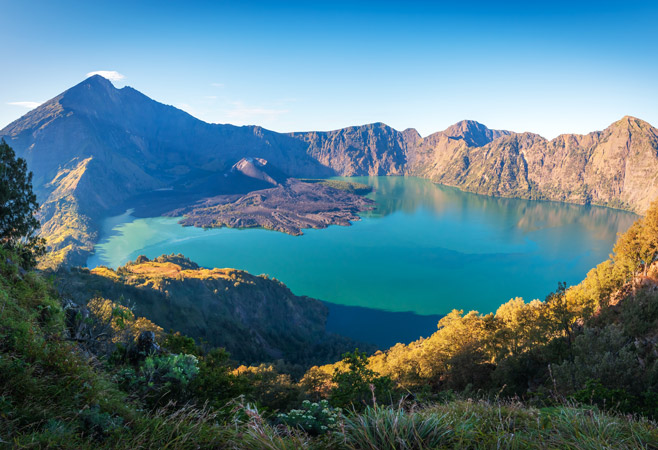
Senaru village on Rinjani's northern
What to expect:
• Trail distance: roughly 7–8 km one way depending on the GPS track
• Elevation gain: around 1,200 meters from Senaru
• Difficulty: moderate to challenging
• Guide cost: 800,000-1,200,000 IDR ($53-80) including porter
• Best months: April-June and September-October
The sunrise from Pos 3 rivals the famous summit sunrise. You'll watch light flood across the caldera, illuminate Segara Anak lake far below, and highlight Mount Barujari, the active volcanic cone rising from the crater floor. Morning clouds often fill the caldera, creating a sea of white that makes the peaks appear to float.
Pack warm layers—Temperatures typically range from 10–15°C, occasionally dropping lower in dry season. Bring snacks and at least two liters of water per person. The trail offers no facilities or water sources after leaving Senaru.
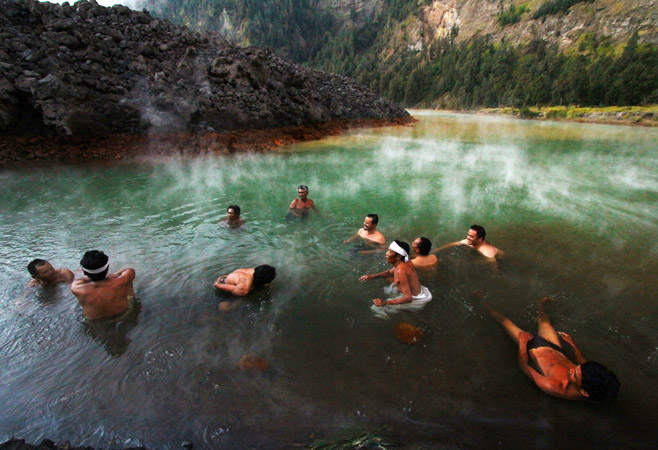
Hot spring bathing in the Rinjani Caldera, Lake Segara
Sembalun Sunrise Point: Easier Access, Stunning Views
For travelers wanting volcanic views without intense hiking, the Sembalun sunrise point delivers. This spot sits on Rinjani's eastern flank, accessible via a relatively gentle 1.5-2 hour walk from Sembalun village.
The trail gains only about 400 meters elevation, making this the easiest Rinjani alternative. Families with older children (10+) manage this trek comfortably. The path winds through agricultural land and grasslands before reaching the viewpoint overlooking Sembalun valley with Rinjani's eastern face rising dramatically in the background.
You won't see the crater lake from here, but the sunrise over Rinjani's peak creates beautiful silhouettes. The valley below—a patchwork of rice terraces and vegetable farms—adds foreground interest that the crater rim lacks.
Local guides charge 400,000-600,000 IDR ($26-40) for this sunrise trek. Some guesthouses in Sembalun village organize informal group treks for even less, around 200,000 IDR ($13) per person when you join others.
This option works particularly well if you're spending time in Sembalun exploring the area's waterfalls and traditional Sasak villages. The sunrise trek adds mountain perspectives without dominating your entire schedule.
Pergasingan Hill: The Social Media Favorite
Pergasingan Hill has exploded in popularity over the past few years, and photos flooding Instagram explain why. This viewpoint offers postcard-perfect compositions with Rinjani as a backdrop and Sembalun valley spreading below.
The hike from Sembalun Lawang village takes only 45-60 minutes. The trail is well-maintained with steps in steeper sections. Even casual hikers manage this climb without major difficulty.
Pergasingan sits at roughly 1,700 meters elevation—much lower than crater rim alternatives but still providing impressive views. The summit features a small viewing platform and basic shelter. During peak season (July-August), expect company from other sunrise seekers, though crowds rarely exceed 20-30 people.
Entrance fee is 10,000 IDR ($0.65) per person. Guides aren't mandatory as the trail is straightforward, but local guides offer their services for 50,000-100,000 IDR ($3-7) if you want company or trail information.
Pergasingan Hill pros and cons:
Advantages | Challenges | Best For |
Very short hike, easy access | No crater lake views, lower elevation | Photographers, casual hikers, families |
Stunning photo compositions | Can be crowded in peak season | Social media content creators |
Inexpensive, no guide required | Less "wilderness" feeling | Budget travelers, time-limited visitors |
The hill works excellently for sunrise or sunset. Sunset actually offers advantages—warmer temperatures, no need for 3:00 AM wake-up calls, and often better light for photography as the sun illuminates Rinjani's western face.
Torean Hill: The Hidden Gem
Torean Hill remains largely unknown to international tourists despite offering spectacular Rinjani views. Located south of Sembalun, this mini trek takes 2-3 hours round trip and offers wide panoramas of Rinjani and the surrounding highlands, with long-distance views toward central Lombok.
The trail passes through savanna-like grasslands dotted with pine trees—terrain that feels surprisingly different from Lombok's typical tropical landscapes. Wildlife sightings are common, including various bird species and occasional monkeys.
Local guides in Sembalun can arrange Torean Hill treks for 300,000-500,000 IDR ($20-33). The route sees perhaps 5-10 trekkers per week, so you'll likely have the viewpoint entirely to yourself.
This option suits travelers who've already visited Pergasingan Hill and want something more secluded, or photographers seeking unique angles on Rinjani that haven't been photographed thousands of times.
Practical Planning for Mini Treks
Choosing the right alternative:
Consider your fitness level honestly. Senaru Crater Rim requires good physical condition similar to hiking 8-10 hours continuously. Sembalun sunrise point and Pergasingan Hill need only basic fitness. Torean Hill falls somewhere between.
Weather matters significantly. Check forecasts 2-3 days before your planned trek. Rain makes trails slippery and dangerous, while clouds obscure views entirely. April-June and September-October offer the most reliable conditions.
Book guides through reputable sources—your guesthouse, established tour operators, or Rinjani Trek Management Board (RTMB) certified guides. Avoid random guide offers on the street, as some lack proper training or insurance.
Essential gear checklist:
- Hiking shoes with good traction
• Headlamp with spare batteries
• Layers: base layer, fleece, windproof jacket
• Sun protection: hat, sunscreen, sunglasses
• 2-3 liters water per person
• Energy snacks: nuts, dried fruit, energy bars
• Basic first aid supplies
• Trekking poles (helpful for Senaru Crater Rim)
Transportation to trailheads:
Senaru village sits about 2.5 hours from Senggigi and 3 hours from Mataram. Sembalun is roughly 3 hours from Senggigi via the northern route. Private car hire costs 500,000-700,000 IDR ($33-46) for the day including waiting time.
Some travelers rent scooters and ride to trailheads independently. Roads are paved but winding with steep sections. Only attempt this if you're an experienced rider comfortable with mountain roads.
Combining Alternatives with Other Lombok Experiences
These Rinjani alternatives integrate beautifully with Lombok's other attractions. After a sunrise trek, spend afternoons exploring Senaru's waterfalls—Sendang Gile and Tiu Kelep both offer refreshing swims and easier walks suitable for post-trek recovery.
Sembalun valley itself deserves 2-3 days. Traditional Sasak villages surround the area, and local homestays provide authentic cultural experiences. The valley produces much of Indonesia's garlic crop, and walking through the agricultural areas reveals rural life rarely seen by tourists rushing between beaches and mountains.
The mini treks also work as excellent "warm-up" hikes if you're considering the full Rinjani expedition. Tackling Senaru Crater Rim first helps you assess your fitness level and comfort with Lombok's mountain terrain before committing to the multi-day trek.
Making the Most of Your Mountain Experience
Mount Rinjani alternatives prove that volcano experiences don't require extreme endurance or multi-day commitments. Whether you choose the challenging Senaru Crater Rim, the accessible Pergasingan Hill, or the remote Torean Hill, each option provides mountain beauty, physical achievement, and spectacular sunrises.
The key is matching the trek to your actual abilities and interests rather than forcing yourself through experiences that create misery instead of memories. These crater rim mini treks and sunrise points let you customize your Rinjani adventure, returning from Lombok with mountain photos and stories without the battle scars of the full expedition.
Frequently Asked Questions
Can you see the crater lake from any of the alternative treks?
Only Senaru Crater Rim provides views of Segara Anak crater lake, though you see it from above rather than at lake level like the full trek. The viewpoint at Pos 3 looks directly into the caldera where the turquoise lake sits surrounded by cliffs. Other alternatives offer excellent Rinjani views but don't include crater lake perspectives.
Do the mini treks require guides, or can you hike independently?
While independent hiking is technically allowed, RTMB strongly encourages trekkers to hire certified guides, and most operators require it for safety through Rinjani Trek Management Board regulations—solo hiking isn't permitted. Pergasingan Hill allows independent hiking as the trail is straightforward and well-marked. Sembalun sunrise point and Torean Hill don't legally require guides, but hiring one is strongly recommended for safety and trail-finding, especially in the dark.
What's the best Rinjani alternative for photography?
Pergasingan Hill wins for iconic compositions with Rinjani as backdrop, perfect for social media and landscape photography. Senaru Crater Rim offers more dramatic, wild perspectives including the crater lake and volcanic terrain. Serious photographers often visit both locations for variety in their portfolio.
Preparing for Your Mount Rinjani Adventure
Exploring Mount Rinjani and its surrounding alternatives requires proper preparation, starting with your Indonesian visa. Whether you're planning mini treks on Lombok or a longer Indonesian island-hopping adventure, GVC simplifies the visa application process so you can focus on training for those sunrise hikes.
GVC specializes in Indonesia visa services for travelers heading to destinations like Lombok, Bali, and beyond. Their online platform handles everything from tourist visas for your Rinjani crater rim trek to extended-stay visas if you're planning several weeks exploring Indonesia's diverse landscapes.
The application process takes just minutes online, with clear instructions for required documents and photos. Most visitors to Lombok arrive through Bali's international airport before taking a short flight or fast boat to the island. GVC's team understands these common travel routes and ensures your visa covers all your Indonesian destinations without complications.
Processing times vary based on your nationality and visa type, so start your application 2-3 weeks before departure. This timeline provides buffer room for any questions or additional documentation requests. You can track your application status online throughout the process, eliminating uncertainty about whether your visa will arrive before your flight.
Budget-conscious trekkers appreciate GVC's transparent approach to costs. Their pricing structure clearly outlines service fees without surprises, helping you plan your total Lombok trip budget alongside accommodation, guide fees, and transportation costs. Getting your visa sorted early means one less thing to worry about while you're researching which sunrise point offers the best views or whether you're fit enough for the Senaru Crater Rim challenge.
Related Articles:
- Best Places To Visit In Indonesia For Your Travel Bucket List
- Top 10 Tourist Attractions In Indonesia For An Ideal Itinerary
- Best Things To Do In Indonesia Makes You Want To Visit Again
- Discover The Best Time To Visit Indonesia A Complete Guide For Travelers
- Lets Find Out The Best Season To Visit Indonesia Together
- Top 6 National Parks In Indonesia You Must Visit
- Gili Islands From Bali What You Need To Know Before You Go
Tags