Qal'at al-Bahrain for Photographers: Lines, Walls, and Shadows
Standing at Qal'at al-Bahrain, I found myself mesmerized by the interplay of light and shadow spans 4,500 years of history, although the visible standing fortifications mainly date to the 16th-century Portuguese occupation, with much older Dilmun structures preserved in excavated foundations. This UNESCO World Heritage site offers photographers one of the Gulf's most compelling subjects, where ancient walls tell stories through weathered stone and Portuguese fortifications create bold architectural lines against the modern Manama skyline. Every angle reveals new compositions that blend historical significance with photographic beauty.
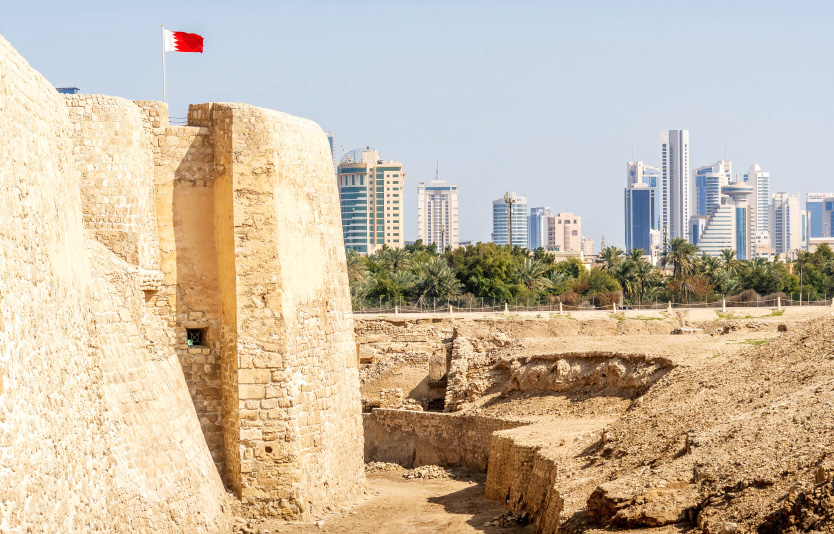
Qal'at al-Bahrain
Understanding the Ancient Walls Photography
The ancient walls at Qal'at al-Bahrain represent multiple civilizations layered like pages in a stone book. The Dilmun period foundations, dating from 2300 BC, contrast dramatically with Portuguese fortifications from the 16th century AD. These varying construction techniques create fascinating photographic subjects where massive Dilmun stones meet precisely mortared Portuguese masonry.
Morning light reveals the texture and craftsmanship differences most clearly. The ancient Dilmun walls used large, irregular stones fitted together without mortar, creating organic lines that photographers can emphasize through careful positioning. Portuguese additions feature smaller, uniform stones with white mortar lines that create geometric patterns perfect for architectural photography.
The excavated areas show wall foundations at different levels, creating depth and layering impossible to achieve in modern architecture. These archaeological cuts provide cross-sectional views of construction techniques spanning millennia, offering unique perspectives for photographers interested in historical documentation.
Key wall photography opportunities:
- Dilmun foundations: Massive irregular stones with organic textures
- Portuguese fortifications: Geometric patterns with precise mortar lines
- Excavation profiles: Cross-sections showing construction layers
- Wall intersections: Meeting points between different historical periods
The contrast between ancient construction methods becomes most apparent where different periods meet, creating compelling compositions that tell stories of cultural change and architectural evolution.
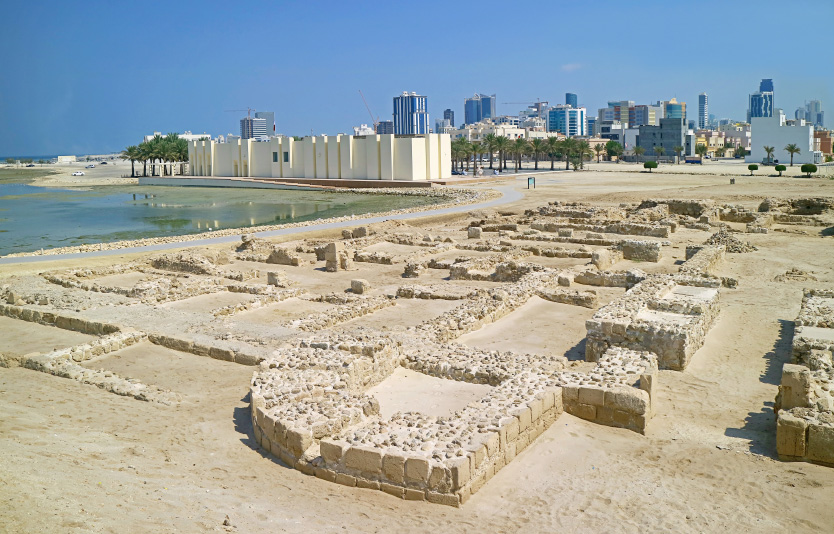
The architectural lines at Qal'at al-Bahrain
Capturing Architectural Lines and Geometry
The architectural lines at Qal'at al-Bahrain create powerful compositional elements that guide viewers through complex historical narratives. The Portuguese fort's straight walls and angular towers provide bold geometric shapes that contrast beautifully with the organic curves of ancient foundations and natural landscape features.
The fortification walls form long, mostly straight alignments that work well in geometrical compositions despite centuries of erosion. These lines lead the eye toward distant views of Manama's modern skyline, creating temporal contrasts that emphasize the site's historical significance within contemporary Bahrain.
Some interior spaces, though partially ruined, still allow for semi-symmetrical compositions using remaining archways and surviving wall segments. The Portuguese builders created regular spacing between architectural elements that produces rhythmic patterns perfect for creating visual harmony in photographs.
Essential architectural elements:
- Fort walls: Clean geometric lines creating strong diagonals
- Tower corners: Angular shapes providing focal points
- Archway sequences: Repeating patterns creating visual rhythm
- Doorway frames: Natural composition tools for interior shots
The elevated position allows photographers to use architectural lines as leading elements toward background subjects, including palm groves, excavation sites, and the distant city skyline.
Mastering Shadow and Light Dynamics
Shadow patterns at Qal'at al-Bahrain change dramatically throughout the day, creating different photographic moods and emphasizing various architectural features. Early morning light creates long shadows that emphasize the fort's three-dimensional structure and reveal surface textures invisible during midday hours.
The thick walls cast deep shadows that create high contrast lighting conditions perfect for dramatic black and white photography. These shadows also provide relief patterns that highlight the craftsmanship of Portuguese stonemasons and the weathering effects of centuries of Gulf climate exposure.
Late afternoon light produces warm colors that enhance the limestone walls' natural golden tones while creating shadow patterns that emphasize the geometric precision of the fortification design. This golden hour lighting transforms the utilitarian military architecture into something almost romantic.
Optimal lighting conditions:
- Early morning: Long shadows revealing texture and dimension
- Midday: Harsh light creating high contrast dramatic effects
- Late afternoon: Warm golden light enhancing limestone colors
- Blue hour: Even lighting perfect for capturing architectural details
The site's elevated position means shadows from surrounding palm trees create additional compositional elements during certain times of day, adding natural frames and leading lines to architectural subjects.
Strategic Viewpoints and Camera Positions
The elevated tell of Qal'at al-Bahrain provides multiple levels for varied photographic perspectives. The highest point within the Portuguese fort offers panoramic views encompassing the excavation areas, surrounding palm groves, and distant Manama skyline. This position works excellently for wide-angle compositions that establish the site's scale and context.
Lower positions around the excavation areas allow for intimate detail shots of ancient walls and archaeological features. These ground-level perspectives emphasize the massive scale of Dilmun construction while providing opportunities to include excavation tools and archaeological markers that add contemporary context.
The circular pathway around the tell's perimeter offers changing perspectives as you move around the site. Each position reveals different relationships between ancient and modern elements, from traditional palm cultivation to contemporary urban development visible across the bay.
Prime photography positions:
- Fort ramparts: Highest elevation for panoramic compositions
- Excavation edges: Ground level for archaeological detail shots
- Perimeter pathway: Varying angles around the site's circumference
- Museum approach: External views showing site context
The site's compact nature means all positions remain easily accessible during a single visit, allowing photographers to capture comprehensive coverage without extensive hiking or special access requirements.
Equipment Recommendations for Heritage Photography
Photographing Qal'at al-Bahrain requires equipment suited to both architectural documentation and challenging lighting conditions. The combination of bright limestone walls and deep shadows creates high dynamic range situations that benefit from cameras with excellent exposure latitude.
Wide-angle lenses prove essential for capturing the fort's geometric proportions and establishing relationships between different architectural periods. However, telephoto lenses also serve important roles in isolating specific wall details and compressing perspective to emphasize the layering of different historical periods.
Tripods become valuable for precise composition alignment, especially when photographing the architectural lines that require careful positioning to maintain vertical and horizontal accuracy. The stable platform also enables multiple exposure techniques for managing the challenging contrast ranges.
Essential equipment considerations:
- Wide-angle lens: 14-24mm for architectural proportions and context
- Telephoto lens: 70-200mm for detail isolation and compression effects
- Sturdy tripod: Precision positioning and stability for long exposures
- Polarizing filter: Reducing reflections and enhancing contrast
The site's exposed position means wind can affect camera stability, making tripod selection particularly important for sharp architectural photography during the windier winter months.
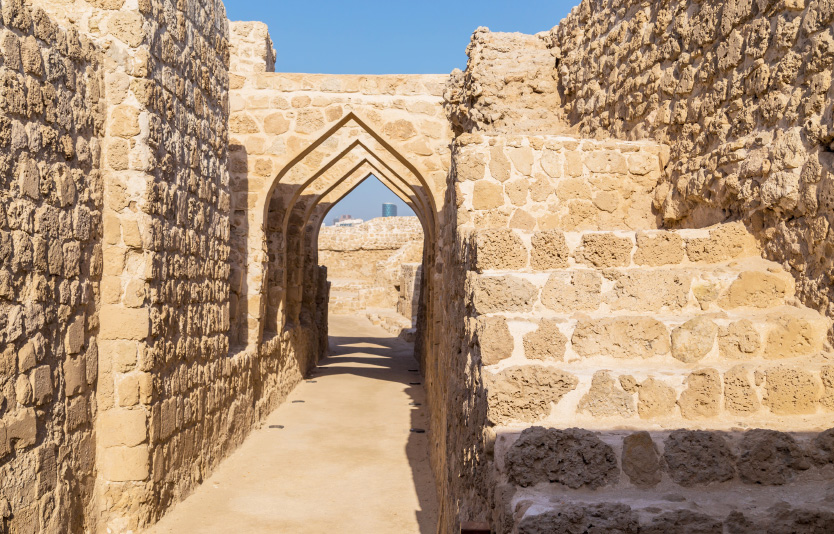
The historical significance of Qal'at al-Bahrain
Historical Context for Meaningful Photography
Understanding the historical significance of Qal'at al-Bahrain enhances photographic interpretation and helps create images that communicate the site's importance beyond mere architectural documentation. The tell represents 4,500 years of continuous human occupation, making it one of the most historically significant locations in the Arabian Peninsula.
The Dilmun civilization that first built here controlled crucial trade routes between Mesopotamia and the Indus Valley, making this location a cultural crossroads for ancient civilizations. This commercial importance continued through Greek, Islamic, and Portuguese periods, each leaving architectural evidence visible in today's excavations.
The Portuguese fort, built in the 16th century, represents the final major construction phase and demonstrates European military architecture adapted to Gulf conditions. Understanding these historical layers helps photographers identify and emphasize the most significant architectural elements.
Historical periods and their features:
- Dilmun (2300-600 BC): Massive stone foundations and water management systems
- Tylos/Greek (300 BC-300 AD): Smaller stone construction with mortar
- Islamic (7th-16th centuries): Varied architectural adaptations
- Portuguese (16th century): European military architecture with local materials
This historical knowledge enables photographers to create images that educate viewers about the site's significance while maintaining aesthetic appeal.
Planning Your Photography Visit
Successful photography at Qal'at al-Bahrain requires planning around both lighting conditions and visitor patterns. The site attracts tour groups, particularly during winter months, making early morning visits preferable for photographers seeking unobstructed compositions.
The on-site museum provides valuable context for understanding what you're photographing, though the most important architectural features remain visible without interior access. Entry fees are minimal (currently 1 BHD for adults), making multiple visits economically feasible for photographers seeking different lighting conditions.
Parking is readily available, and the site's proximity to Manama (approximately 15 minutes by car) makes it easily accessible for multiple visits during different lighting conditions.
Visit Time | Advantages | Challenges |
Early Morning | Dramatic shadows, fewer crowds | Limited food/beverage options |
Midday | Clear visibility, harsh contrast | Crowded, intense heat |
Late Afternoon | Golden light, warm colors | Some areas in shadow |
What's the best time of day for photographing Qal'at al-Bahrain?
Early morning (6:30-8:30 AM) and late afternoon (4:00-6:00 PM) provide the most dramatic lighting conditions. Morning light creates long shadows that emphasize architectural textures, while afternoon light produces warm colors that enhance the limestone walls. Avoid midday when harsh overhead light creates unflattering shadows.
Do I need permission to photograph at Qal'at al-Bahrain?
No special permission is required for general photography at the site. However, commercial photography or drone usage may require advance authorization from Bahraini cultural authorities. Tripods are generally permitted, but respect other visitors and don't block pathways during busy periods.
What lens focal lengths work best for architectural photography here?
A wide-angle lens (14-35mm) is essential for capturing the fort's proportions and establishing context with surrounding excavations. A mid-telephoto lens (70-135mm) helps isolate architectural details and compress the layers of different historical periods. Ultra-wide lenses can create dramatic perspectives but may distort the architectural lines.
Qal'at al-Bahrain offers photographers a unique opportunity to document 4,500 years of architectural evolution in a single location. The interplay of ancient walls, precise architectural lines, and changing shadow patterns creates endless possibilities for compelling heritage photography that honors this remarkable UNESCO World Heritage site.
Discover Bahrain's Ancient Heritage with GVC
Exploring Qal'at al-Bahrain and capturing the dramatic interplay of ancient walls and architectural lines requires proper travel documentation to ensure seamless access to this extraordinary UNESCO World Heritage site. This remarkable tell, with its 4,500 years of continuous occupation and stunning photographic opportunities, represents one of the Arabian Peninsula's most significant archaeological treasures.
GVC provides expert visa services that streamline your Bahraini travel requirements, allowing you to focus on documenting the fascinating architectural details and historical layers that make this site a photographer's paradise. Whether planning an extended cultural photography expedition throughout Bahrain's heritage sites or combining architectural documentation with modern attractions across the kingdom, professional visa assistance ensures all documentation requirements are handled efficiently for comprehensive exploration.
Understanding Bahrain's visa regulations becomes straightforward with GVC's comprehensive guidance and transparent pricing structure, providing confidence throughout your application process. The convenience of secure payment processing simplifies your entire visa experience, ensuring peace of mind as your heritage photography adventure approaches. With ancient civilizations, Portuguese fortifications, and unique archaeological features throughout Bahrain waiting to be documented, expert visa services let you concentrate on planning your perfect photography expedition while professionals handle your travel documentation seamlessly.
Related Articles:
- Bahrain Sightseeing Places Top Destinations That You Should Visit
- Bahrain Tourist Attractions The Ultimate Guide To Exploring The Pearl Of The Gulf
- Best Places To Visit In Bahrain For First Time Travelers
- 10 Things To Do In Bahrain For First Time Comers
- Bahrain Travel Guide Everything You Need To Know Before You Go
- Top Things To Do In Bahrain Travel Guide
- Visit Bahrain A Gem Of The Arabian Gulf
Tags