Bukhara Night Walks: Lantern‑Lit Madrasas, Photography Spots and Safe Routes in the Old City
The evening call to prayer echoes across the ancient city as the sun dips below Bukhara's skyline. Within minutes, warm architectural lighting gradually illuminates the madrasas, transforming the Old City into something straight out of Arabian Nights. This is when Bukhara truly comes alive—when the day-tripping tourists have left and the heat has mellowed into a perfect walking temperature.
A Bukhara evening stroll offers something you won't find during daylight hours: intimacy with history. The crowds thin out, local families emerge for their own walks, and the architecture glows in ways that no midday photograph can capture. After spending multiple evenings exploring these streets, I've mapped out the best routes, photography angles, and timing to make your night walk unforgettable.
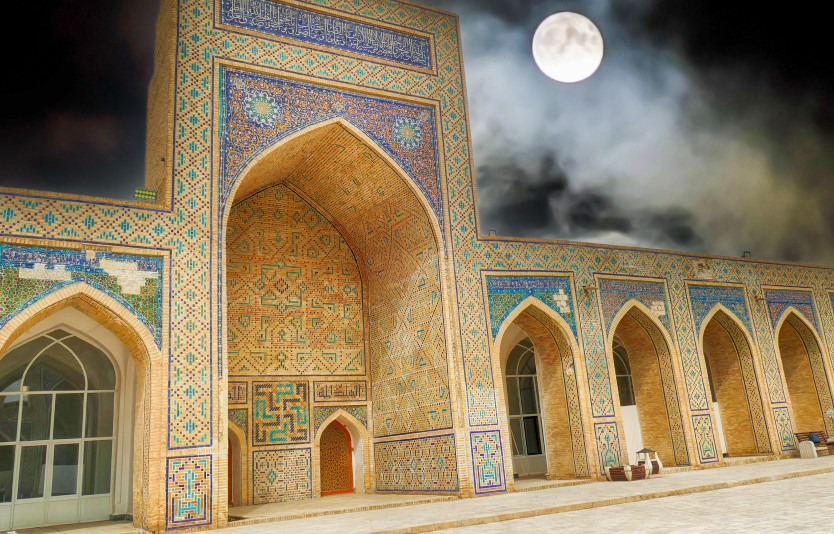
Poi kalyan complex illuminated by bright full moon at night in Bukhara, Uzbekistan
Why Bukhara's Old Town Shines After Dark
Most travelers pack their days with Bukhara's highlights but overlook the evening magic. The Bukhara old town lights system was thoughtfully designed to enhance rather than overwhelm the ancient architecture. Uplighting emphasizes the turquoise domes and intricate tile work without the harsh shadows of direct sun.
The temperature drops significantly after sunset—often by 10-15 degrees Celsius. Summer evenings become comfortable instead of scorching. Winter nights stay crisp but manageable with a jacket. This climate shift alone makes evening exploration more pleasant than midday sightseeing.
Local life shifts to the streets after dark. Families gather around the Lyabi-Hauz pool, tea houses fill with conversation, and street vendors set up their carts. You'll experience Bukhara as residents do, not just as tourists do.
The Classic Lyabi-Hauz to Ark Fortress Route
This 1.5-kilometer walk covers Bukhara's greatest hits while following Bukhara safe walking routes through well-lit, populated areas.
Starting Point: Lyabi-Hauz Complex (7:00 PM)
Begin at the Lyabi-Hauz reflecting pool when the lights first come on. The three madrasas surrounding the pool—Kukeldash, Nodir Divan-Begi, and another facing the water—create perfect symmetry when reflected in the still water. Arrive early to claim a bench or tea house seat facing west for the best view as darkness falls.
The restaurants around Lyabi-Hauz stay open until 11 PM. Grab dinner before or after your walk—the plov at Lyabi House Restaurant consistently delivers quality at reasonable prices (40,000-60,000 som per dish).
Stop 1: Nadir Divan-Begi Madrasa (7:20 PM)
Walk around the left side of the pool to photograph Nadir Divan-Begi Madrasa. The famous phoenix and sun faces on its entrance arch look mystical under golden lights. Position yourself across the pool with the water in your foreground for reflection shots.
Stop 2: Trading Domes (7:35 PM)
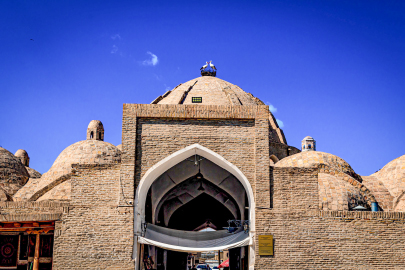
Follow the main pedestrian street northward through the covered trading domes. These historic market structures—Toki Zargaron (jewelers), Toki Tilpak Furushon (hat sellers), and Toki Sarrofon (money changers)—connect via atmospheric passageways. Interior lighting highlights the brick archways while shops display carpets, ceramics, and textiles.
The domes stay relatively busy until 9 PM when most shops close. Security guards patrol regularly.
Stop 3: Kalon Minaret and Mosque Complex (7:50 PM)
The 47-meter Kalon Minaret dominates Bukhara's skyline day and night. Evening illumination transforms it into a glowing tower visible from kilometers away. The adjacent Kalon Mosque and Mir-i-Arab Madrasa create the most photographed view in Uzbekistan.
Best Photography Angles:
- Stand in the courtyard center for the classic straight-on shot
- Move to the far right corner for both structures in one frame
- Climb the stairs of Kalon Mosque's entrance for an elevated perspective
- Capture long exposures (3-5 seconds) to smooth out pedestrian movement
The complex grounds stay open until 10 PM. Entry is free for the courtyard; mosque interior access costs 15,000 som but closes at 6 PM.
Stop 4: Ark Fortress (8:15 PM)
End at the Ark Fortress, Bukhara's oldest structure. While the interior closes at 6 PM, the fortress exterior looks magnificent when floodlit. The massive earthen walls and main gate create dramatic photographs.
The plaza in front of the Ark hosts a small night market selling snacks and souvenirs. It's safe and well-patrolled but watch your belongings in any crowded area.

BUKHARA, UZBEKISTAN - Tourists marveling at the illuminated kalyan minaret and mir-i-arab madrasah
Advanced Route: Chor Minor and Backstreet Exploration
For those who've mastered the main circuit, venture beyond the tourist core to discover quieter Bukhara photography spots and authentic neighborhood life.
Chor Minor Mosque (8:30 PM departure from Ark)
This quirky four-towered mosque sits 10 minutes east of the main complex. The walk passes through residential neighborhoods where locals gather outside their homes. Each tower features different decorative patterns, and the intimate scale makes for unique compositions.
The surrounding area has limited street lighting. Bring a phone with offline maps and a small flashlight. Stick to the main roads—the route is safe but can feel isolated for solo travelers after 9:30 PM.
Bolo Hauz Mosque (Evening from Ark)
Often overlooked, this working mosque near the Ark features a stunning wooden-pillared porch. Evening prayers occur around sunset, and while non-Muslims cannot enter during prayers, you can observe and photograph the exterior. The wooden columns catch the artificial light beautifully.
Essential Night Photography Settings and Gear
The Bukhara night atmosphere demands specific camera settings and equipment for successful shots.
Recommended Settings:
- ISO: 800-3200 depending on available light
- Aperture: f/2.8-f/5.6 for architectural shots
- Shutter speed: 1/30 second minimum for handheld; use tripod for longer exposures
- White balance: Auto works, but try 3200K-4000K for warmer tones
Essential Gear:
- Lightweight travel tripod (most locations allow tripod use)
- Fast prime lens (35mm f/1.8 or 50mm f/1.8 works excellently)
- Extra batteries (cold nights drain power faster)
- Lens cloth (dust is constant in Bukhara)
Smartphone photographers should use night mode, brace against walls or railings, and shoot multiple frames to ensure sharpness. The iPhone 13 and later models, Samsung S21+, and Google Pixel 6+ produce impressive results in Bukhara's lighting conditions.
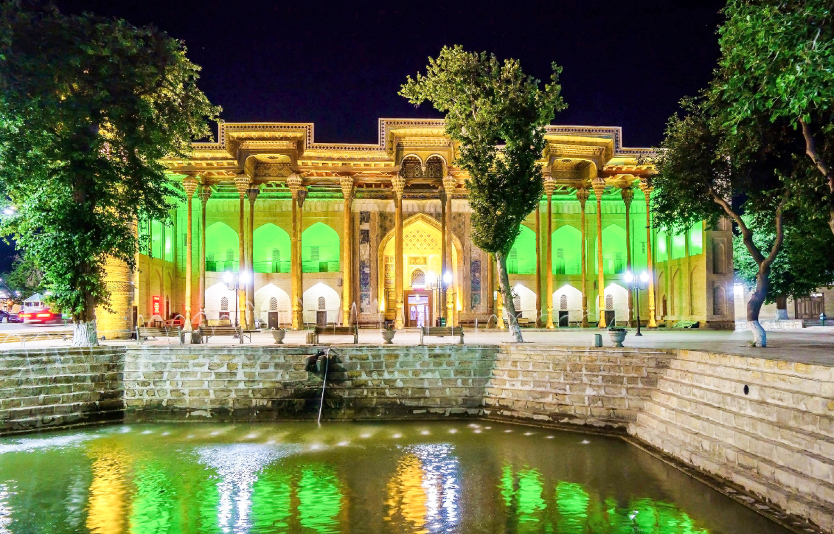
Night view of the Bolo-Haouz mosque in Bukhara, Uzbekistan
Safety Considerations and Practical Tips
Bukhara ranks as one of Central Asia's safest cities, but smart precautions ensure worry-free evening exploration.
General Safety Guidelines:
- Stay in illuminated areas—all major monuments have excellent lighting
- Walk in groups when possible, especially after 9:30 PM
- Keep valuables secure but accessible (money belts under clothing)
- Download offline maps before heading out (Maps.me works well)
- Carry emergency numbers: Police 102, Tourist Police +998 65 224-25-21
- Inform your hotel of your walking route and expected return time
Areas to Avoid After Dark:
The Old City itself is remarkably safe, but skip the unlit parks and empty lots on the historic district's periphery. The area southeast of Chor Minor lacks street lighting and foot traffic.
Women Travelers:
Solo women report feeling comfortable walking Bukhara's main routes until 10 PM. Dress modestly (covered shoulders and knees) to minimize attention. The conservative culture means harassment is rare, but confidence and purposeful walking discourage unwanted interactions.
Scams and Annoyances:
Aggressive carpet sellers target tourists near Lyabi-Hauz and the trading domes, especially in evening when they're trying to make final sales. A firm "No, thank you" works. Don't enter shops unless genuinely interested—backing out becomes awkward.
Unlicensed guides approach tourists offering tours for negotiable rates. Licensed guides wear official badges. If hiring evening guide services, arrange through your hotel.
Timing Your Night Walk for Maximum Impact
Time | Lighting Conditions | Crowd Levels | Best For |
6:30-7:30 PM | Golden hour transitioning to blue hour | Moderate tourist presence | Photography during magical light, capturing both natural and artificial illumination |
7:30-9:00 PM | Full artificial lighting, deep blue sky | Busiest tourist period | Main monument visits, people-watching, restaurant dining |
9:00-10:30 PM | Pure night atmosphere, monuments fully lit | Mostly locals, few tourists | Intimate experience, quiet photography, observing local evening life |
Seasonal Variations:
- Summer (June-August): Start walks after 8 PM when temperatures drop. Sunset occurs around 7:45 PM. Streets stay active until 11 PM.
- Spring/Fall (April-May, September-October): Perfect evening temperatures. Start at 7 PM. Ideal photography light lasts longer.
- Winter (November-March): Begin at 6 PM before cold intensifies. Fewer tourists mean easier photography but some restaurants close earlier.
Friday and Saturday evenings see increased local crowds around Lyabi-Hauz as families enjoy weekend outings.
Where to Rest and Refresh During Your Walk
Strategic stops keep your energy up and provide observation points for soaking in the atmosphere.
Tea Houses Around Lyabi-Hauz:
Traditional chaikhanas offer perfect rest spots. Order green tea (5,000 som), find a raised platform with cushions, and watch the scene. Chinar Restaurant and Minzifa Terrace provide the best views. Most accept both cash and cards.
Street Vendors:
Fresh pomegranate juice (15,000 som), roasted nuts (10,000 som per bag), and samsa pastries (5,000 som each) appear along the main routes. Quality varies—look for vendors with steady customer flow.
Hotel Courtyards:
Several historic hotels open their courtyards to non-guests. Amulet Hotel and Hovli Poyon offer beautiful spaces for a quick rest. Ask permission and perhaps buy a drink from their cafe.
Extending Your Night Walk Experience
Cultural Performances:
The Nadir Divan-Begi Madrasa hosts evening folklore shows from March through November. Performances start at 8 PM, run 50 minutes, and cost 50,000-80,000 som. Book through your hotel or buy tickets at the venue entrance. The show combines traditional music and dance in the madrasa courtyard—atmospheric but somewhat touristy.
Rooftop Restaurants:
Several restaurants feature rooftop terraces with monument views. Silk Road Tea House near Lyabi-Hauz offers 360-degree panoramas. Arrive before sunset to claim good seats. Dinner averages 100,000-150,000 som per person.
Night Markets:
A small bazaar operates near the Ark Fortress until 10 PM. Vendors sell souvenirs, sweets, and handicrafts. Prices are inflated but negotiable. Better deals appear at the daytime markets, but the evening atmosphere has its own charm.
Frequently Asked Questions
Is it safe to walk alone in Bukhara's Old City at night?
Bukhara's historic center is very safe for solo travelers until 10 PM. The main tourist routes stay well-lit and patrolled. Solo women should feel comfortable on the Lyabi-Hauz to Ark circuit but might prefer companions for the Chor Minor route after 9 PM. Crime rates targeting tourists are extremely low. Standard precautions like securing valuables and staying aware of surroundings are sufficient.
What time do the monument lights turn on in Bukhara?
Lighting systems activate approximately 30 minutes before official sunset year-round. In summer, expect lights around 7:15 PM; winter activation occurs closer to 5:30 PM. The lights remain on until midnight for major monuments like Kalon Minaret and Lyabi-Hauz, while secondary sites may dim by 10 PM. Check sunset times for your specific travel dates to plan accordingly.
Do I need special permits or tickets for nighttime photography in Bukhara?
No permits are required for photography in public spaces or monument exteriors. Courtyard entry to Kalon Mosque complex costs 15,000 som during daytime hours but courtyard access is free in the evening when the interior closes. Tripods are generally allowed though some sites may restrict their use during busy periods. Interior photography of working mosques requires respectful timing around prayer schedules.
Planning Your Bukhara Night Adventures and Travel Documentation
Bukhara night walks rank among Central Asia's most enchanting experiences, but international visitors need proper documentation before experiencing these illuminated wonders. Uzbekistan welcomes tourists through various visa options designed for convenient entry.
The e-Visa system makes Uzbekistan accessible for short-term visits. Most nationalities qualify for online application processing, eliminating embassy visits. Processing typically completes within three business days, though applying two weeks before departure provides comfortable buffer time for any issues.
GVC streamlines the entire visa application process with expert guidance at every step. Their platform helps travelers navigate requirements specific to their nationality while avoiding common application mistakes that delay approval. When planning your Bukhara journey, getting your Uzbekistan travel authorization sorted early removes stress and lets you focus on excitement instead of paperwork.
The visa process involves gathering standard documentation—passport copy, travel dates, and accommodation details. Service costs vary based on processing speed preferences, with options from standard to rush service for last-minute travelers. The investment in professional assistance often saves time and prevents costly mistakes.
Once submitted, tracking application progress brings peace of mind during the waiting period. GVC's status checking system provides real-time updates without repeated email inquiries or uncertainty about application whereabouts.
With documentation secured, you're free to plan those magical evening walks through Lyabi-Hauz, photograph the illuminated Kalon Minaret, and experience Bukhara as centuries of travelers have—under stars and lantern light, where history feels tangible and the ancient Silk Road's spirit lives on in every shadowed archway and glowing dome.
Related Articles:
- Bukhara Sunrise Quiet Lanes
- Bukhara Hammam Culture Guide
- Uzbekistan Places To Visit For Stunning Vacation
- Best Cities To Visit In Uzbekistan Journey Through Time Culture
- Unmissable Things To Do In Samarkand Heart Silk Road
- Top 10 Places To Visit In Uzbekistan That Will Leave You Awe
- Discover Architectural Marvels Silk Road Uzbekistan
Tags