Hussaini Suspension Bridge Safety Guide: Best Time to Cross and What to Expect in Hunza
December 09, 2025
The first glimpse of the Hussaini Suspension Bridge stops most travelers mid-step. Wooden planks dangle at irregular intervals above the turquoise Hunza River, with gaps revealing the rushing water far below. This isn't a bridge for the faint-hearted—it's an adventure that tests nerve and rewards courage with unforgettable memories.
Located in Pakistan's stunning Hunza Valley, the Hussaini bridge is often described by travelers as one of the most intimidating suspension bridges in the world. But "dangerous" needs context. With proper preparation and smart timing, this Pakistan suspension bridge transforms from intimidating obstacle into manageable challenge. Understanding Hussaini bridge safety protocols makes all the difference between anxiety-filled crossing and exhilarating experience.
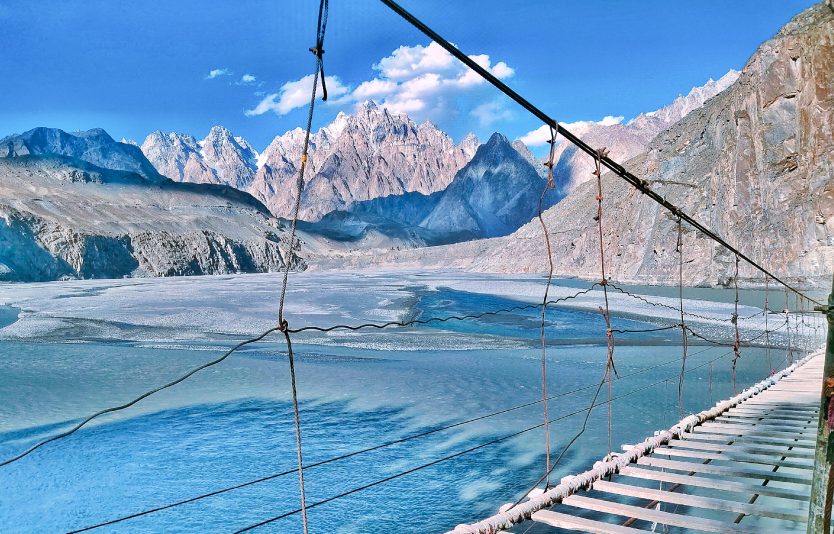
A dangerous hussaini bridge on the blue water river in Pakistan
Understanding the Hussaini Bridge Structure
The bridge spans roughly 180–200 meters across the Hunza River, connecting Hussaini village to Zarabad. Originally built as a vital link for local communities, it now attracts adventurers from around the globe. The structure consists of steel cables supporting wooden planks, with many boards missing, broken, or loose.
Key structural features:
- Steel cable foundation anchored on both banks
- Wooden plank walkway with significant gaps
- No side barriers or safety rails
- Height of roughly 100 feet above water
- Visible sway even in light winds
- Parallel old bridge remains visible below
The bridge's condition varies seasonally. Winter weather and monsoon rains deteriorate the wooden components, while local maintenance efforts provide periodic repairs. This reality means the crossing experience differs depending on visit timing and recent weather patterns.
The remnants of an older, collapsed bridge hang just below the current structure—a sobering reminder of the region's infrastructure challenges. Local residents have traditionally crossed the bridge to transport supplies, especially before alternative routes became available, demonstrating that with familiarity and respect, the bridge serves its purpose safely.
Hussaini Bridge Safety: Essential Precautions and Guidelines
Hussaini bridge safety starts before stepping onto the first plank. Mental preparation matters as much as physical readiness. For first-time visitors, the crossing usually takes 10–15 minutes at a careful pace.
Critical safety measures:
- Cross one person at a time to reduce weight and sway
- Test each plank before putting full weight on it
- Maintain three points of contact when possible
- Keep center of gravity low by bending slightly
- Look ahead at the path, not down at the water
- Hold cables firmly but don't rely on them entirely
- Remove backpacks and carry them in front for better balance
Weather conditions dramatically affect safety. Strong winds make crossing extremely hazardous—locals won't attempt it when gusts exceed moderate levels. Rain creates slippery surfaces on already unstable planks. Fog reduces visibility, making gap assessment difficult.
Footwear choice matters enormously. Hiking boots or trail shoes with good grip provide the best traction. Avoid sandals, flip-flops, or smooth-soled shoes. Some experienced crossers prefer going barefoot for better feel and grip, though this increases injury risk from splinters or nails.
Physical fitness requirements are moderate. The crossing doesn't demand peak athleticism, but basic balance, reasonable strength, and absence of severe vertigo prove essential. Those with significant fear of heights should honestly assess whether attempting the crossing serves their trip positively or creates unnecessary trauma.
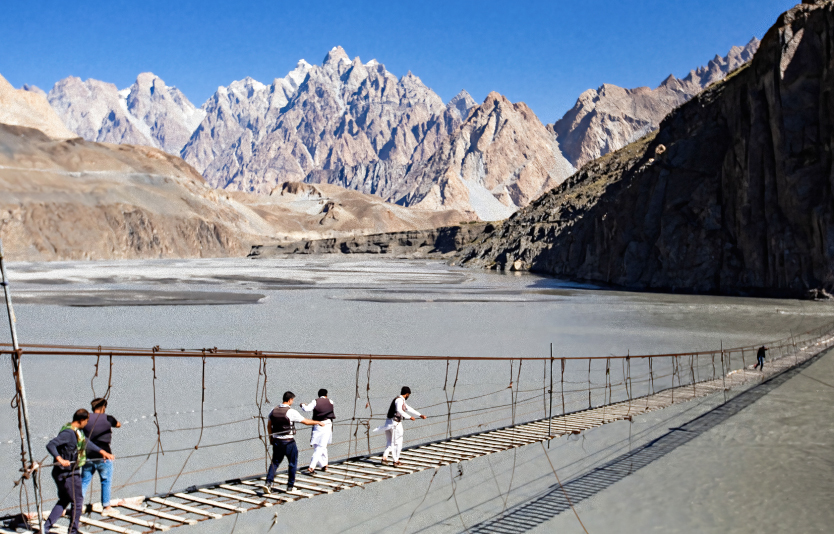
People crossing Hussaini suspension bridge
Best Timing for Hunza Valley Crossing
The Hunza valley crossing experience varies dramatically by season, time of day, and even day of week. Strategic timing enhances both safety and enjoyment while reducing crowds and weather risks.
Seasonal considerations:
Season | Conditions | Crowd Level | Recommendation |
March-May | Mild, occasional rain | Moderate | Good - pleasant weather |
June-August | Warm, monsoon risk | High | Risky - weather unpredictable |
September-November | Cool, stable | Low to Moderate | Best - ideal conditions |
December-February | Cold, ice risk | Very Low | Challenging - icy planks |
September through November provides optimal conditions. Monsoon season has passed, temperatures remain comfortable, and the Hunza Valley displays spectacular autumn colors. The bridge planks are typically in better condition after any summer maintenance work.
Daily timing strategy:
Early morning crossings (6-8 AM) offer several advantages. Winds remain minimal, tourist numbers stay low, and morning light creates stunning photography conditions. The cool temperature also helps maintain composure during the crossing.
Late afternoon (4-6 PM) provides the second-best window. Most tour groups have departed, and softer light enhances the valley's beauty. However, leaving sufficient time before dark remains crucial—crossing after sunset isn't advisable given the missing planks and lack of lighting.
Weekdays see significantly fewer visitors than weekends. Pakistani tourists often visit on Fridays and Saturdays, while international travelers cluster on weekends when tours operate. Tuesday through Thursday mornings offer the most crowd-free crossing tips opportunities.
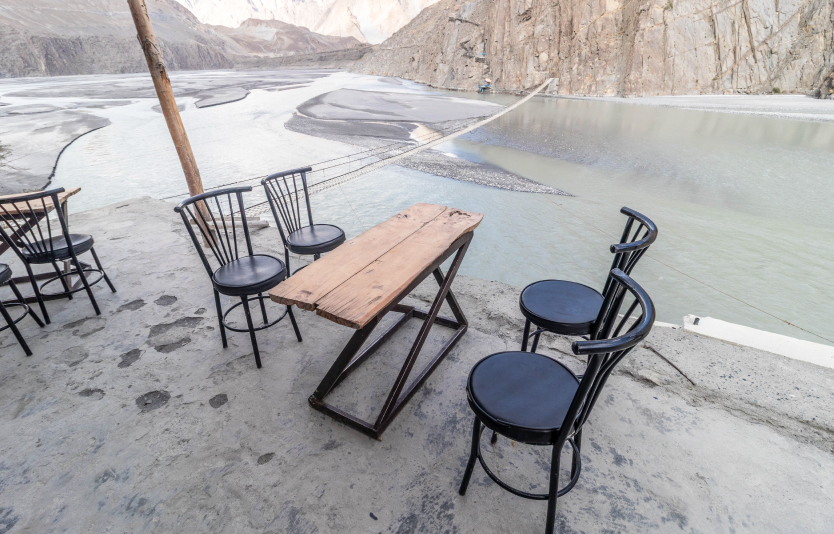
Cafe above Hussaini Suspension Bridge in Hunza valley
What to Expect During the Pakistan Suspension Bridge Experience
Reality rarely matches expectations at the Hussaini bridge. Videos and photos fail to capture the visceral sensation of wooden planks shifting underfoot while cables creak overhead. Understanding what awaits helps manage the emotional response.
The approach to the bridge builds anticipation. A short walk from the road through Hussaini village provides time to observe others crossing—watching locals navigate effortlessly often boosts confidence. The bridge entrance itself appears deceptively stable before revealing the gaps and damage further along.
Sensory experiences during crossing:
- Constant swaying motion responding to movement
- Wind noise through cables and gaps
- Creaking sounds from planks and cable friction
- Visual of rushing river through missing boards
- Adrenaline surge creating heightened awareness
- Time distortion making minutes feel extended
The first third feels manageable for most people. The middle section contains the largest gaps and most damaged planks—this is where many pause to steady nerves. The final third brings psychological relief as the far bank approaches, though maintaining focus remains important until completely off the structure.
Local children from the village are accustomed to crossing with their families, though this does not necessarily mean the bridge is suitable for all visiting children. Age matters less than temperament—calm, careful individuals of any age manage better than anxious, rushed adults. Some visitors reach the middle and turn back, which represents a valid choice deserving respect rather than judgment.
Photography presents challenges. Managing a camera while maintaining safe hand positions requires planning. Smartphone cameras work better than larger equipment. Taking photos before or after crossing rather than during proves wiser for most visitors. Action cameras with chest mounts capture the experience hands-free.
Preparing for Your Hunza Valley Adventure
Beyond the bridge itself, Hunza Valley offers extraordinary scenery and cultural experiences. The Hussaini bridge represents just one element of a larger adventure requiring proper preparation.
Essential items to pack:
- Sturdy hiking shoes with excellent grip
- Light jacket for wind protection
- Small daypack (carry in front during crossing)
- Water bottle and snacks
- Sun protection (hat, sunscreen, sunglasses)
- Basic first aid supplies
- Portable phone charger for photos
The journey to Hussaini from Gilgit takes approximately 3-4 hours via the Karakoram Highway. Road conditions vary seasonally, with occasional landslides causing delays. Hiring a local driver familiar with the route provides both safety and cultural insights that enhance the experience.
Accommodation options exist in nearby Gulmit and Passu, with guesthouses ranging from basic (PKR 1,500-2,500) to comfortable (PKR 3,500-5,500) per night. Staying locally supports the community and provides authentic interaction with Hunza residents whose ancestors built and maintained these bridges for generations.
Respect for local culture matters deeply. Hunza is predominantly Ismaili Muslim, known for progressive attitudes but still valuing modest dress. Women should cover shoulders and knees; men should avoid going shirtless. Photography of local people requires permission—most residents welcome photos when asked respectfully.
Managing Fear and Building Confidence
The psychological aspect of crossing the Hussaini bridge challenges many visitors more than physical demands. Fear represents a natural, protective response to genuine risk. The goal isn't eliminating fear but managing it effectively.
Breathing techniques help maintain calm. Before starting, practice slow, deep breaths—four counts in, hold four counts, four counts out. Continue this pattern during crossing whenever anxiety builds. This activates the parasympathetic nervous system, countering panic responses.
Breaking the crossing into segments makes it feel manageable. Focus only on reaching the next solid plank rather than viewing the entire span. This approach prevents overwhelming feelings that lead to freezing or poor decisions.
Having a crossing buddy provides psychological support, though remember to maintain single-file spacing for safety. Verbal encouragement between crossings helps, but avoid creating pressure that rushes someone beyond their comfort zone.
Some visitors find the anticipation worse than the actual crossing. Once committed and moving, focus narrows to immediate tasks, and fear often diminishes. Others experience increasing anxiety midway—there's no shame in slowly working through this or deciding the bridge isn't for you.
Frequently Asked Questions
Is crossing the Hussaini bridge actually dangerous or just scary?
The bridge presents real risks that deserve respect, but proper precautions significantly reduce danger. The structure has supported countless crossings over decades. Most accidents occur from recklessness—running, crossing during storms, or overloading the bridge. Following safety guidelines, choosing good conditions, and moving carefully makes crossing challenging but manageable for most reasonably fit adults without severe height phobia.
What happens if someone panics halfway across?
Panic attacks on the bridge do occur occasionally. The best response involves stopping, securing hand position on cables, focusing on breathing, and waiting until calm returns. Local guides often position themselves to assist if someone struggles. Having someone talk calmly from the near end helps tremendously. In extreme cases, visitors have crawled across slowly—there's absolutely no shame in using whatever method gets you safely to either side.
Are there alternatives for people who can't cross the Hussaini bridge?
Several viewpoints near both banks allow experiencing the bridge without crossing. Photography from these positions captures the structure's dramatic setting. Additionally, a newer, safer suspension bridge exists downstream near Passu Glacier—it offers thrilling views without the extreme challenge. The Attabad Lake, Baltit Fort, and numerous hiking trails throughout Hunza provide other adventures for those who skip the Hussaini crossing.
Final Thoughts on This Iconic Crossing
The Hussaini Suspension Bridge offers an experience that stays with travelers long after leaving Hunza Valley. Whether you cross successfully, turn back partway, or admire from the banks, confronting this challenge teaches something about personal limits and courage.
The bridge exists not as a tourist attraction but as a vital link for local communities. Treating it with respect—following safety protocols, avoiding damage to already compromised planks, and appreciating the ingenuity required to build and maintain such structures in remote mountains—honors both the bridge and the people who depend on it.
For those who do cross, the accomplishment brings genuine satisfaction. Standing on the far bank, looking back at what you've just navigated, creates a memorable moment of achievement. The adrenaline, the focus required, and the stunning Hunza scenery combine into an experience few adventures can match.
Exploring Pakistan Safely: Essential Travel Planning
Understanding Hussaini bridge safety protocols represents just one aspect of planning a successful Pakistan adventure. The country's stunning northern regions—including Hunza Valley, the Karakoram Highway, and countless mountain passes—reward careful preparation with experiences unavailable anywhere else in the world.
Before embarking on adventures that test both nerve and navigation skills, ensure travel documentation allows stress-free exploration. GVC streamlines visa applications for Pakistan and destinations worldwide, handling bureaucratic complexities while travelers focus on trip planning. Their experienced team understands the specific requirements for Pakistan entry permits and visa types, ensuring applications meet current regulations without delays.
Transparent pricing for visa services eliminates financial surprises, with clear breakdowns for standard and expedited processing options. Once your application is submitted, convenient online tools let you monitor your visa approval progress, providing updates as your departure date approaches. With documentation secured efficiently, attention shifts to the preparations that truly matter: researching optimal crossing times, selecting appropriate footwear for suspension bridge navigation, and building the mental readiness required for one of travel's most memorable challenges in Pakistan's breathtaking Hunza Valley.
Tags